
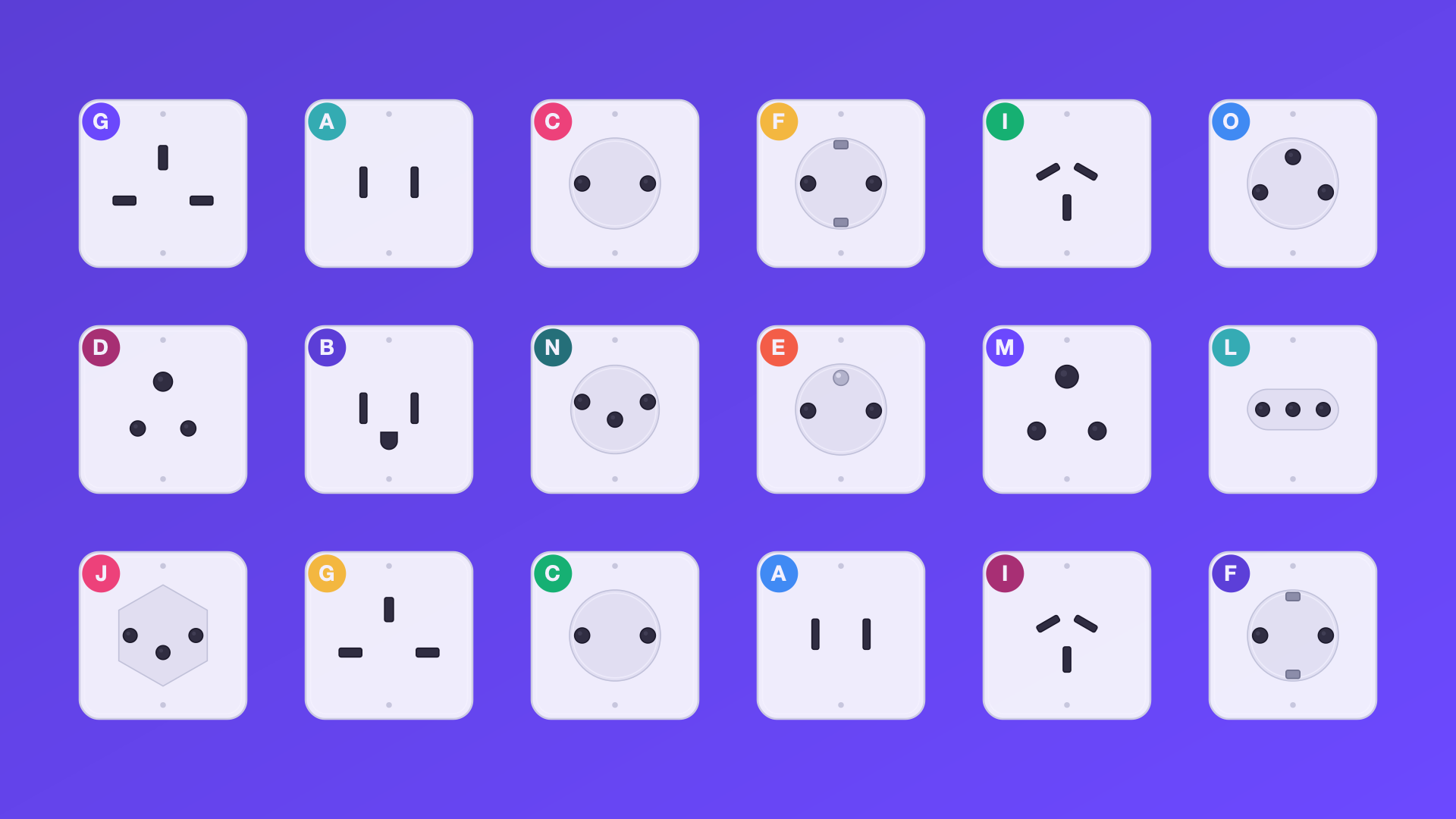
In short: Thailand uses Type A, B, C and O sockets at 230 V. A UK plug needs an adapter almost everywhere we go except Sri Lanka, Cambodia, Jordan and Zanzibar; a European two-pin plug fits across most of Asia, Africa and South America; a US plug fits in Thailand, Vietnam, Cambodia, the Philippines, Japan and all of the Americas. One universal travel adapter covers the lot. You almost never need a voltage converter: phone and laptop chargers are dual-voltage, hair tools usually are not.
Will my plug fit? Every country at a glance
Find the country, read across. Fits means the plug goes into the socket; it says nothing about voltage, which is the next section. Tap a country name to jump to its socket pictures.
| Country | Sockets | Voltage | UK plug | EU plug | US plug | AU plug |
|---|---|---|---|---|---|---|
| Thailand | A, B, C, O | 230 V, 50 Hz | Adapter | Fits | Fits | Adapter |
| Vietnam | A, C, F | 220 V, 50 Hz | Adapter | Fits | Fits | Adapter |
| Cambodia | A, C, G | 230 V, 50 Hz | Fits | Fits | Fits | Adapter |
| Indonesia (Bali) | C, F | 230 V, 50 Hz | Adapter | Fits | Adapter | Adapter |
| Philippines | A, B, C | 220 V, 60 Hz | Adapter | Fits | Fits | Adapter |
| Sri Lanka | D, G | 230 V, 50 Hz | Fits | Adapter | Adapter | Adapter |
| India | C, D, M | 230 V, 50 Hz | Adapter | Fits | Adapter | Adapter |
| Nepal | C, D, M | 230 V, 50 Hz | Adapter | Fits | Adapter | Adapter |
| Japan | A, B | 100 V, 50/60 Hz | Adapter | Adapter | Fits | Adapter |
| South Korea | C, F | 220 V, 60 Hz | Adapter | Fits | Adapter | Adapter |
| China | A, C, I | 220 V, 50 Hz | Adapter | Fits | Fits | Fits |
| Kyrgyzstan | C, F | 220 V, 50 Hz | Adapter | Fits | Adapter | Adapter |
| Australia | I | 230 V, 50 Hz | Adapter | Adapter | Adapter | Fits |
| New Zealand | I | 230 V, 50 Hz | Adapter | Adapter | Adapter | Fits |
| Fiji | I | 240 V, 50 Hz | Adapter | Adapter | Adapter | Fits |
| Mexico | A, B | 127 V, 60 Hz | Adapter | Adapter | Fits | Adapter |
| Belize | A, B, G | 110 V, 60 Hz | Fits | Adapter | Fits | Adapter |
| Guatemala | A, B | 120 V, 60 Hz | Adapter | Adapter | Fits | Adapter |
| Costa Rica | A, B | 120 V, 60 Hz | Adapter | Adapter | Fits | Adapter |
| Colombia | A, B | 110 V, 60 Hz | Adapter | Adapter | Fits | Adapter |
| Ecuador (Galápagos) | A, B | 120 V, 60 Hz | Adapter | Adapter | Fits | Adapter |
| Peru | A, B, C | 220 V, 60 Hz | Adapter | Fits | Fits | Adapter |
| Brazil | C, N | 127/220 V, 60 Hz | Adapter | Fits | Adapter | Adapter |
| Argentina | C, I | 220 V, 50 Hz | Adapter | Fits | Adapter | Fits |
| Egypt | C, F | 220 V, 50 Hz | Adapter | Fits | Adapter | Adapter |
| Jordan | C, F, G | 230 V, 50 Hz | Fits | Fits | Adapter | Adapter |
| Morocco | C, E | 220 V, 50 Hz | Adapter | Fits | Adapter | Adapter |
| South Africa | C, D, M, N | 230 V, 50 Hz | Adapter | Fits | Adapter | Adapter |
| Tanzania (Zanzibar) | D, G | 230 V, 50 Hz | Fits | Adapter | Adapter | Adapter |
| Cape Verde | C, F | 220 V, 50 Hz | Adapter | Fits | Adapter | Adapter |
| Croatia | C, F | 230 V, 50 Hz | Adapter | Fits | Adapter | Adapter |
| Greece | C, F | 230 V, 50 Hz | Adapter | Fits | Adapter | Adapter |
| Bulgaria | C, F | 230 V, 50 Hz | Adapter | Fits | Adapter | Adapter |
| Italy | C, F, L | 230 V, 50 Hz | Adapter | Fits | Adapter | Adapter |
| Austria | C, F | 230 V, 50 Hz | Adapter | Fits | Adapter | Adapter |
| Hungary | C, F | 230 V, 50 Hz | Adapter | Fits | Adapter | Adapter |
| Slovenia | C, F | 230 V, 50 Hz | Adapter | Fits | Adapter | Adapter |
UK covers Ireland, Malta, Singapore, Malaysia and Hong Kong plugs. EU means the two-round-pin Europlug, which also fits French, Schuko, Brazilian and Swiss sockets. US covers Canada, Mexico and Japan. AU covers New Zealand, Fiji and Argentina, whose sockets share the shape.
In this guide
- The socket types you will meet
- Voltage: do I need a converter?
- Southeast Asia
- South Asia
- East Asia
- Central Asia
- Oceania
- The Americas
- Middle East and Africa
- Europe
- What to pack
The socket types you will meet
Every socket on our routes is one of these twelve. The letters are the international designations, which is what adapter packaging and hotel websites use.
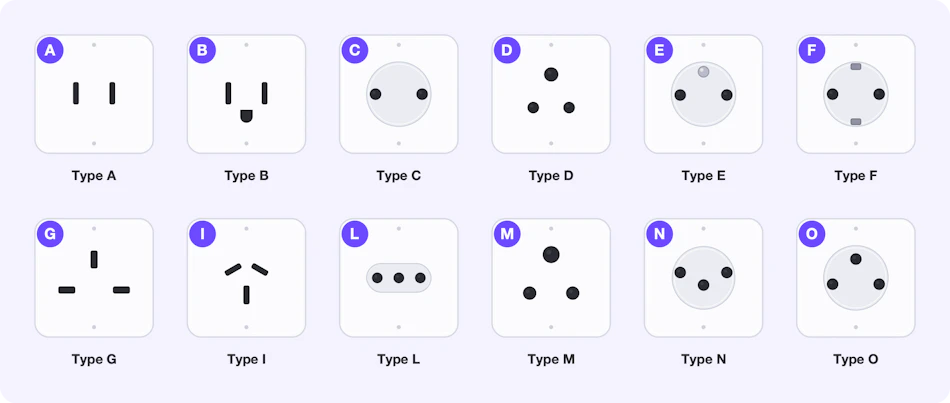
- Type A: two flat parallel pins, no earth. USA, Canada, Japan, Mexico, Thailand, the Philippines.
- Type B: Type A plus a round earth pin. The same countries; the earthed version of the socket.
- Type C: the Europlug: two round pins, no earth. The most widely accepted plug in the world and the shape to pack if you only pack one.
- Type D: three large round pins in a triangle, the old British standard. India, Sri Lanka, Nepal, Tanzania.
- Type E: French: two round pins and an earth pin that sticks out of the socket. Morocco, France, Belgium.
- Type F: Schuko: two round pins with earth clips top and bottom. Germany, Indonesia, South Korea, most of Europe.
- Type G: the UK three-pin. Britain, Ireland, Sri Lanka, Cambodia's hotels, Jordan, Zanzibar, Belize.
- Type I: two slanted flat pins and an earth pin. Australia, New Zealand, Fiji, China, Argentina.
- Type L: three round pins in a line. Italy only.
- Type M: like Type D but bigger. South Africa, and high-power appliances in India and Nepal.
- Type N: three round pins in a recessed face. Brazil and the new South African standard.
- Type O: Thailand's own three-round-pin socket, introduced in 2006 and now fitted in most new buildings.
Voltage: do I need a converter?
Almost certainly not. Look at the small print on your charger: if it says 100-240 V, and every phone, laptop, camera and e-reader charger made in the last fifteen years does, it works on every supply in the world and only the plug shape matters.
The exceptions are heating devices: hair dryers, straighteners, curling tongs, travel kettles and some electric shavers. A UK or European one is built for 230 V and will barely work on the 100 to 127 V supplies of Japan, Mexico, Central America, Colombia and parts of Brazil. A US or Canadian one is built for 120 V and will burn out on the 220 to 240 V of Asia, Africa, Australia, Peru and Argentina. A converter that can handle a hair dryer is heavy and expensive; a dual-voltage travel dryer costs less and weighs a fraction of it.
Good to know: Frequency, the 50 Hz or 60 Hz figure, does not matter for anything you would carry in a backpack. It only affects old clocks and motors.
Southeast Asia
Thailand
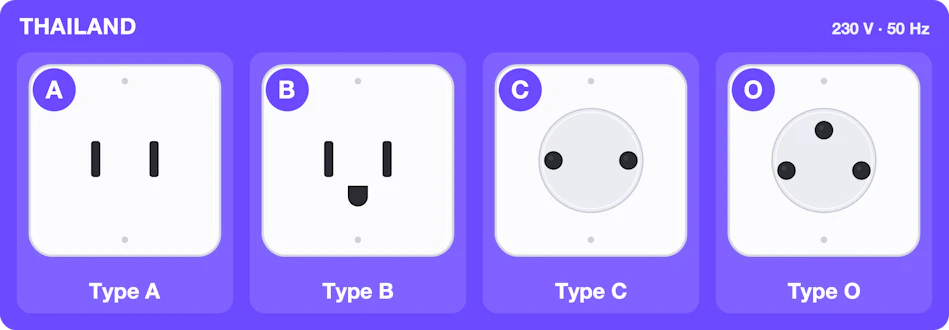
Thailand runs on 230 volts at 50 Hz, the same as the UK and Europe. The plug types are the American flat-pin Type A and B, the European two-round-pin Type C, and Thailand's own three-round-pin Type O. In practice most hotel and hostel sockets are hybrids with two long slots that swallow flat and round pins alike, so a European or American plug goes straight in. A UK plug does not fit anything, and neither does an Australian one.
Adapters are sold in every 7-Eleven and night market for around 100 baht, but they are the flimsy kind. Bring a decent one from home and treat the Thai purchase as a spare. Sockets on the overnight trains are the hybrid two-pin type and there are only a couple per carriage, so a short multi-port USB charger is worth more than a second adapter.
EU and US plugs fit without an adapter; UK and AU plugs need one. See our Thailand tours or the Thailand Expedition. Related: Thailand weather guide, whether you need a visa for Thailand, the TDAC arrival card.
Vietnam
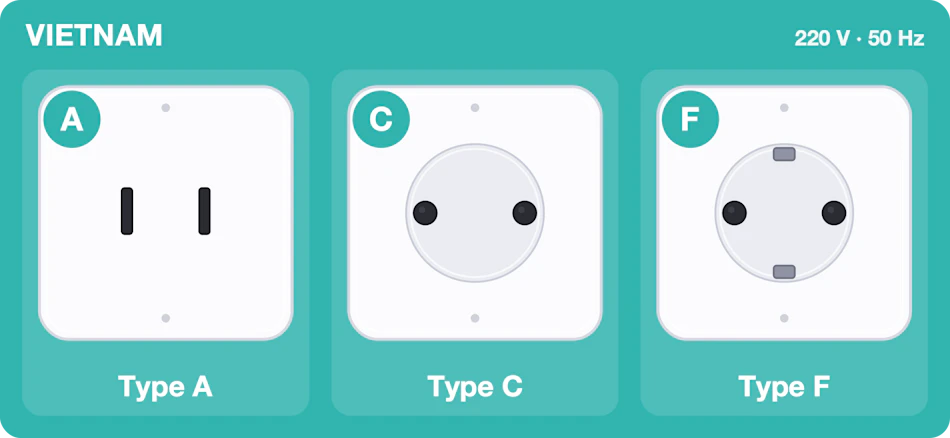
Vietnam is 220 volts at 50 Hz. Nearly every socket is a two-pin hybrid that takes both the flat American Type A and the round European Type C, and newer hotels in Hanoi, Da Nang and Ho Chi Minh City add the earthed Type F. UK and Australian plugs need an adapter throughout. Sleeper trains and buses have a few two-pin sockets per carriage.
EU and US plugs fit without an adapter; UK and AU plugs need one. See our Vietnam tours. Related: Vietnam weather guide, Vietnam visa guide.
Cambodia
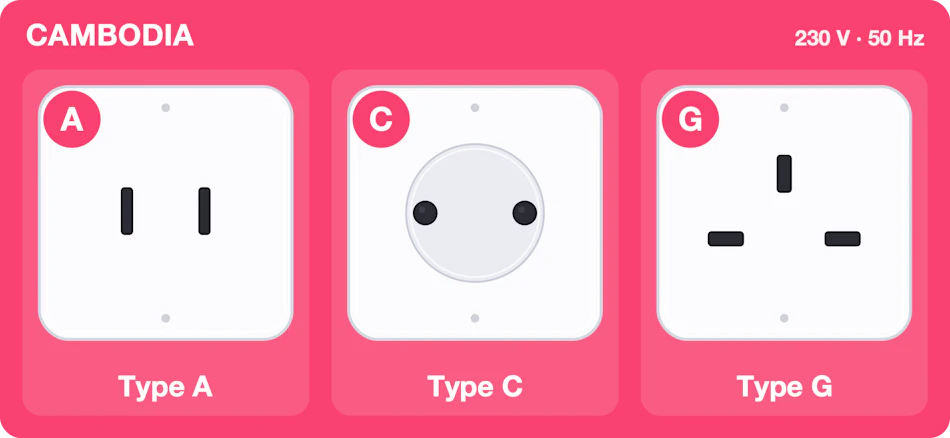
Cambodia is 230 volts at 50 Hz and genuinely mixed. Guesthouses and older buildings have the two-pin Type A and C hybrids you meet in Thailand and Vietnam; hotels in Phnom Penh and Siem Reap increasingly fit the UK-style Type G. That makes Cambodia one of the few places in Southeast Asia where a British plug sometimes fits without an adapter, but not reliably enough to leave the adapter at home.
UK, EU and US plugs fit without an adapter; AU plugs need one. See our Cambodia tour. Related: Cambodia visa guide.
Indonesia (Bali)
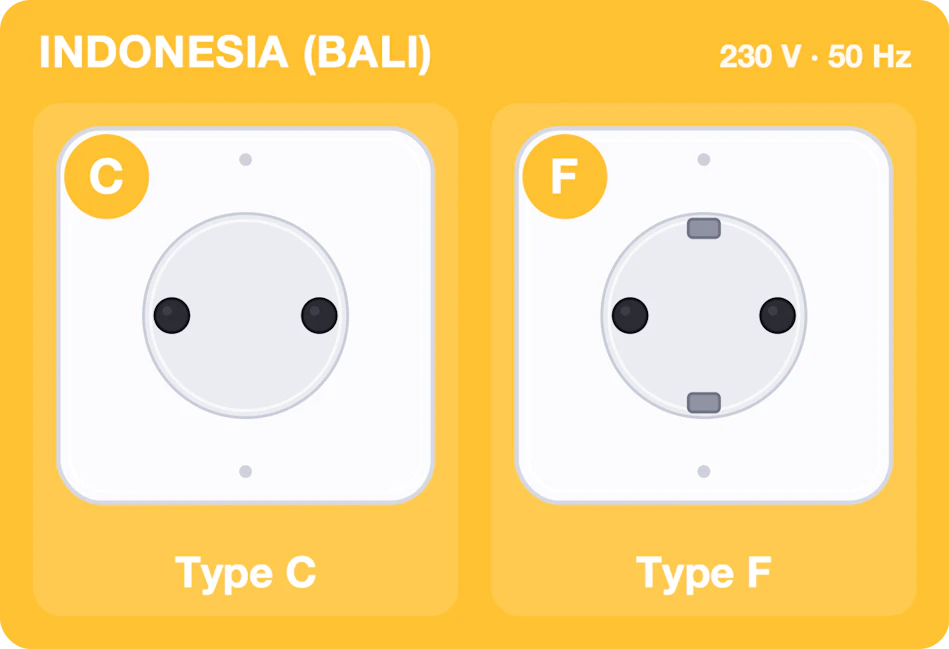
Bali, and the rest of Indonesia, is 230 volts at 50 Hz with European round-pin sockets: the plain Type C and the earthed Type F (Schuko). A European plug fits everywhere. UK, American and Australian plugs all need an adapter, and the cheap ones sold in Kuta tend to fall out of the recessed sockets, so bring one that grips.
EU plugs fit without an adapter; UK, US and AU plugs need one. See our Bali tours. Related: Bali weather guide, Indonesian tourist visa.
Philippines
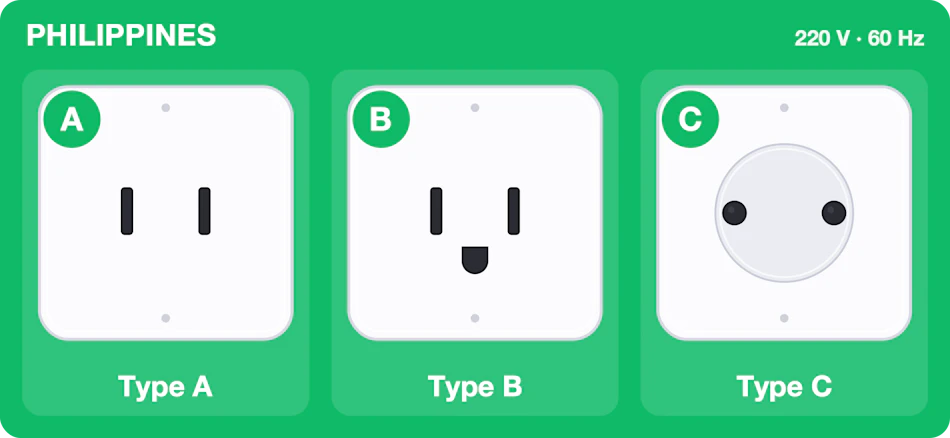
The Philippines uses American-style flat-pin Type A and B sockets, with the round-pin Type C in some hotels, but the supply is 220 volts at 60 Hz, not the 110 volts the socket shape suggests. Phones and laptops do not care. A US hair dryer or straightener that is not rated to 240 volts will burn out, so read the label before you plug in.
EU and US plugs fit without an adapter; UK and AU plugs need one. See our Philippines tours. Related: Philippines weather guide.
South Asia
Sri Lanka
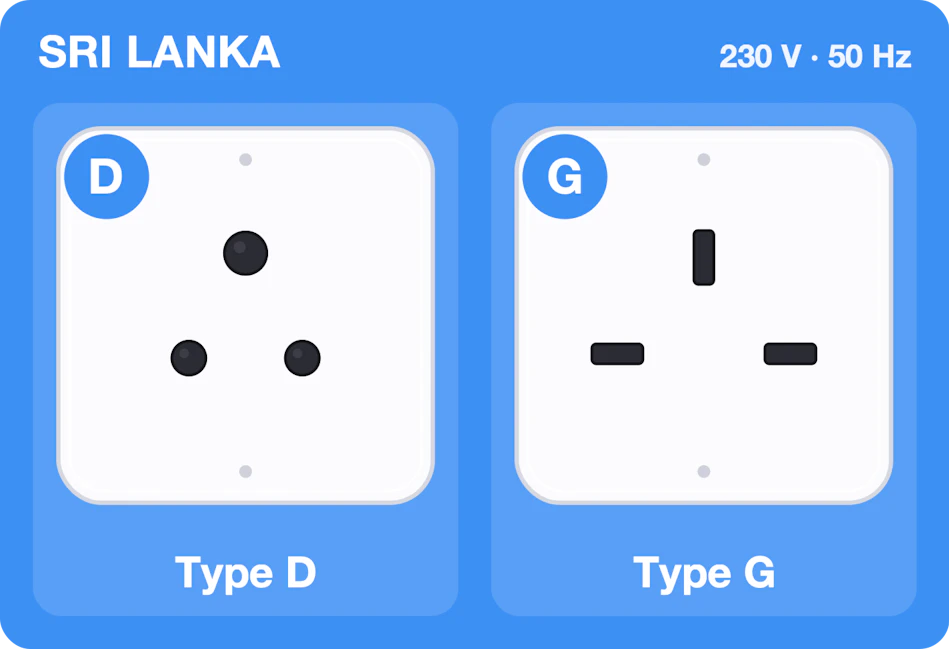
Sri Lanka is 230 volts at 50 Hz. It adopted the UK's Type G as the national standard in 2018, so newer hotels take a British plug directly. Older guesthouses, and most of the sockets in the hill country, still have the small three-round-pin Type D. Many sockets are universal-style plates that accept both. If you are travelling from the UK or Ireland, Sri Lanka is the one country on our Asian trips where you may not touch your adapter.
UK plugs fit without an adapter; EU, US and AU plugs need one. See our Sri Lanka tour. Related: Sri Lanka weather guide, Sri Lanka visa guide.
India
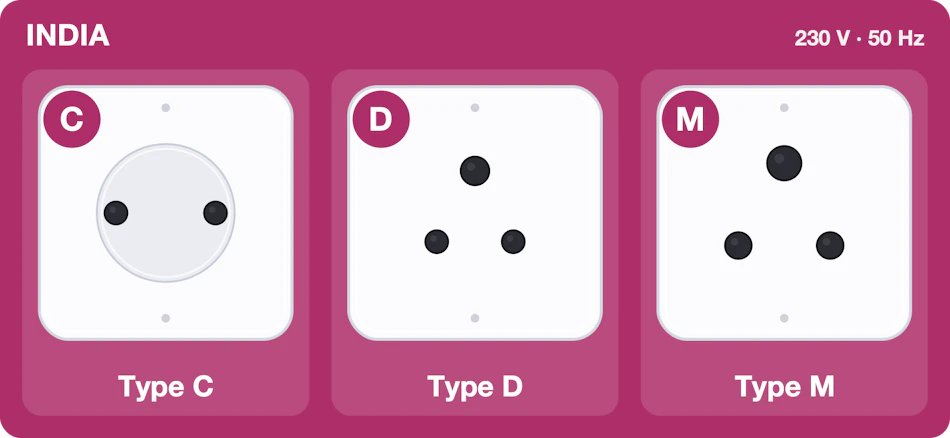
Sockets: Type C, D, M. Supply: 230 V, 50 Hz. Round-pin sockets throughout. Most take a Europlug (Type C); the big three-pin Type D and M are for high-power appliances.
EU plugs fit without an adapter; UK, US and AU plugs need one. See our India tour. Related: India visa guide.
Nepal
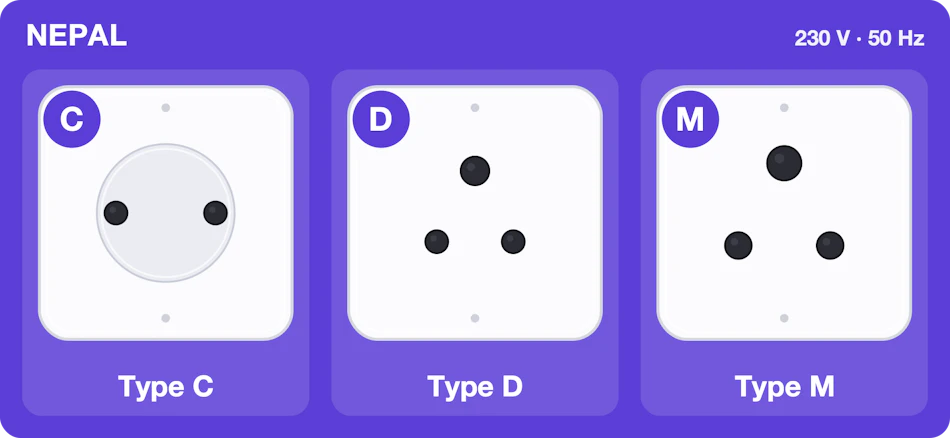
Sockets: Type C, D, M. Supply: 230 V, 50 Hz. Same as India. Power cuts are common outside Kathmandu and Pokhara, so a power bank earns its place on a trek.
EU plugs fit without an adapter; UK, US and AU plugs need one. See our India and Nepal tour. Related: Nepal weather guide.
East Asia
Japan
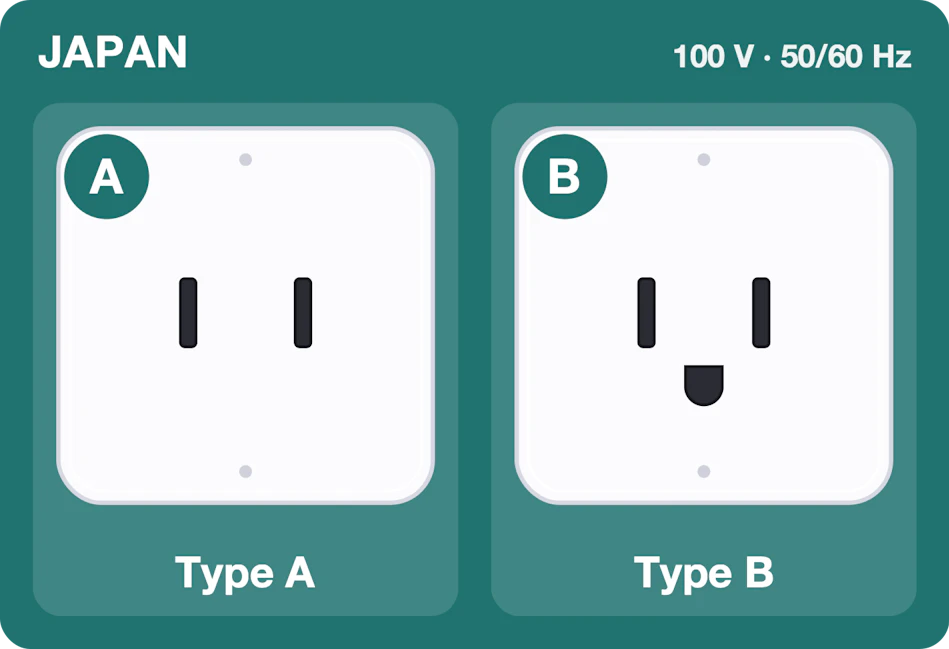
Japan uses the flat-pin Type A and B sockets you find in the US, but at 100 volts, the lowest in the world. East Japan, including Tokyo, runs at 50 Hz; west Japan, including Osaka and Kyoto, at 60 Hz. Anything with a 100 to 240 V charger, which is every phone, laptop and camera, is fine. A European hair dryer will run weakly and a Japanese one brought home will die on 230 V. UK, European and Australian plugs need an adapter, and the earthed Type B socket is uncommon, so a three-pin US plug may not fit either.
US plugs fit without an adapter; UK, EU and AU plugs need one. See our Japan tours. Related: Japan visa guide.
South Korea
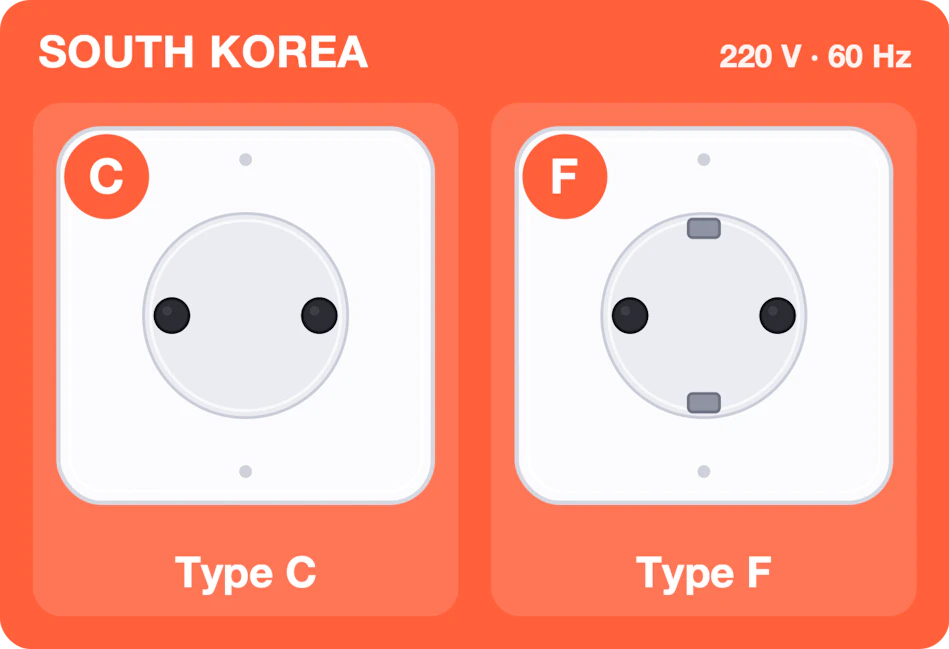
Sockets: Type C, F. Supply: 220 V, 60 Hz. European round-pin sockets. A Europlug or Schuko fits directly.
EU plugs fit without an adapter; UK, US and AU plugs need one. See our South Korea tour. Related: South Korea visa guide, Korea weather guide.
China
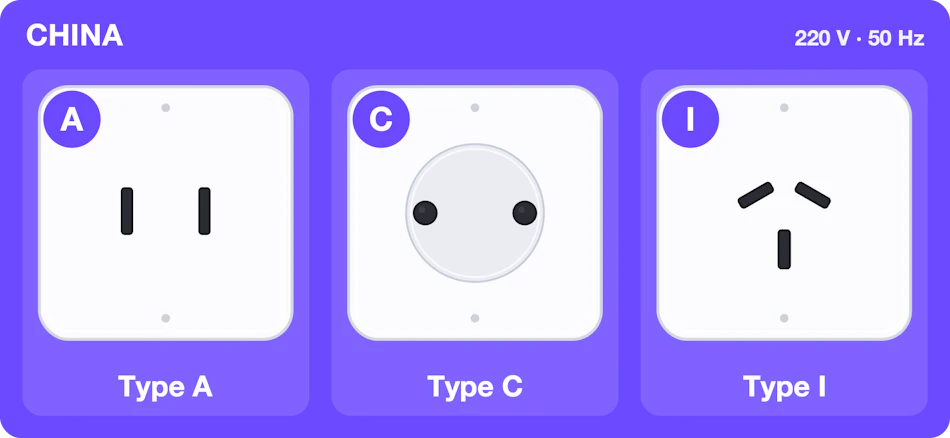
Sockets: Type A, C, I. Supply: 220 V, 50 Hz. Hotel sockets are usually combined: a Type I (Australian-style) three-pin above a two-pin slot that takes A and C.
EU, US and AU plugs fit without an adapter; UK plugs need one. See our China tour.
Central Asia
Kyrgyzstan
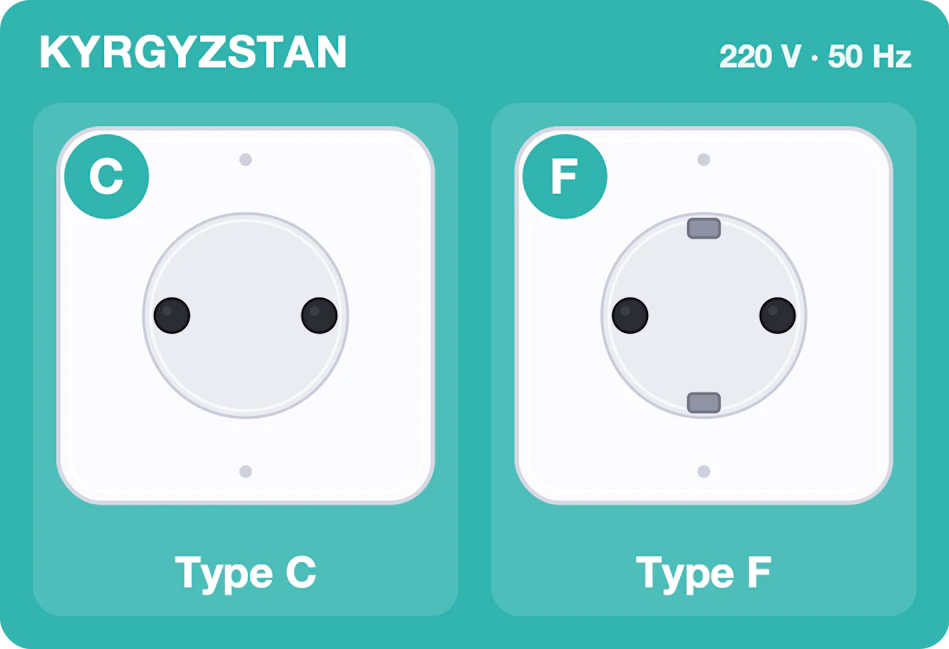
Sockets: Type C, F. Supply: 220 V, 50 Hz. Soviet-era round-pin sockets. Europlugs fit; Schuko plugs usually do too.
EU plugs fit without an adapter; UK, US and AU plugs need one. See our Kyrgyzstan tour. Related: Kyrgyzstan visa guide.
Oceania
Australia
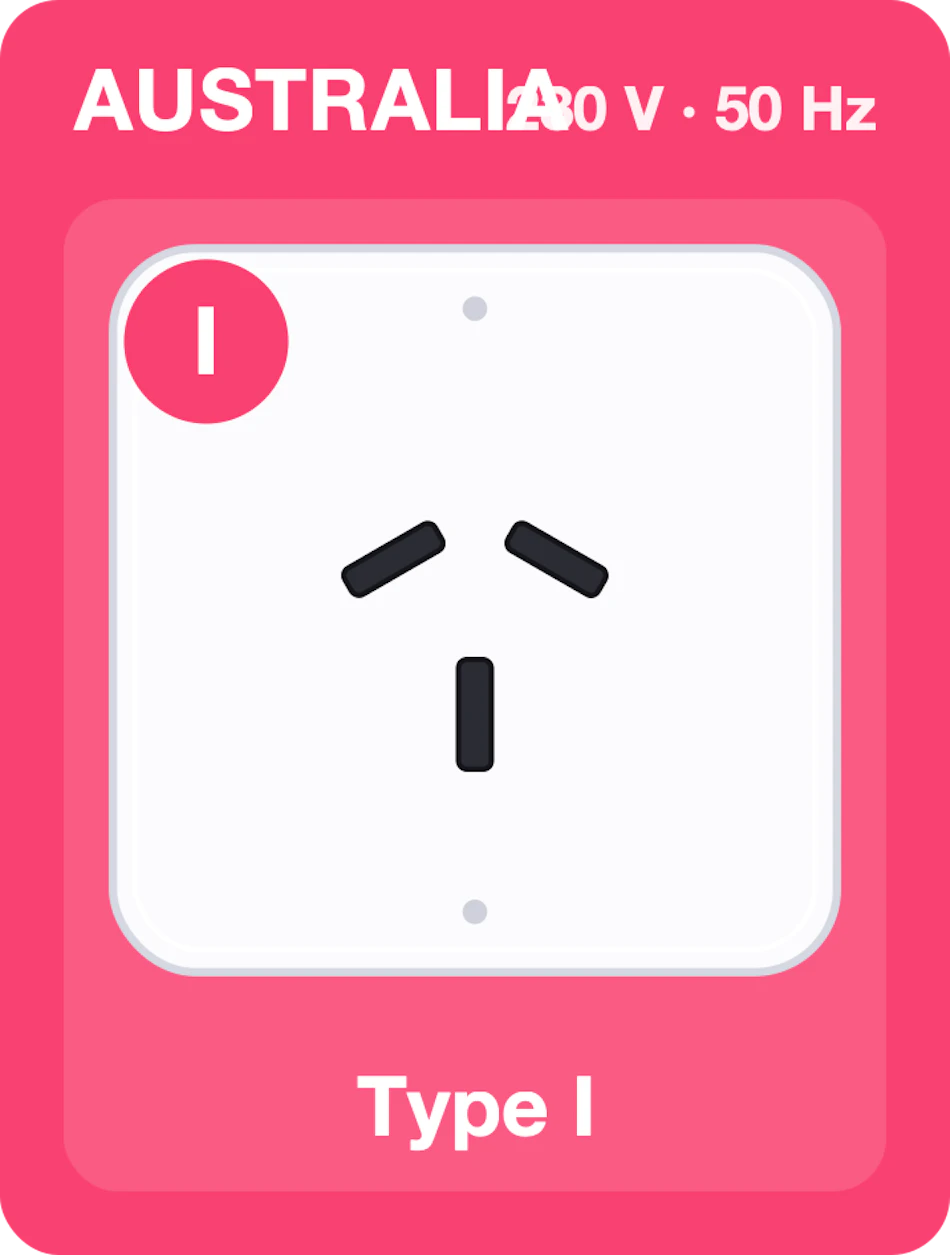
Australia has one socket type, the slanted-pin Type I, at 230 volts, 50 Hz. Nothing else fits, so everyone except New Zealanders needs an adapter. Hostels along the east coast are strict about sockets in dorms, so a multi-port USB charger keeps the peace.
AU plugs fit without an adapter; UK, EU and US plugs need one. See our Australia tours. Related: east coast weather guide, Australia visa guide.
New Zealand
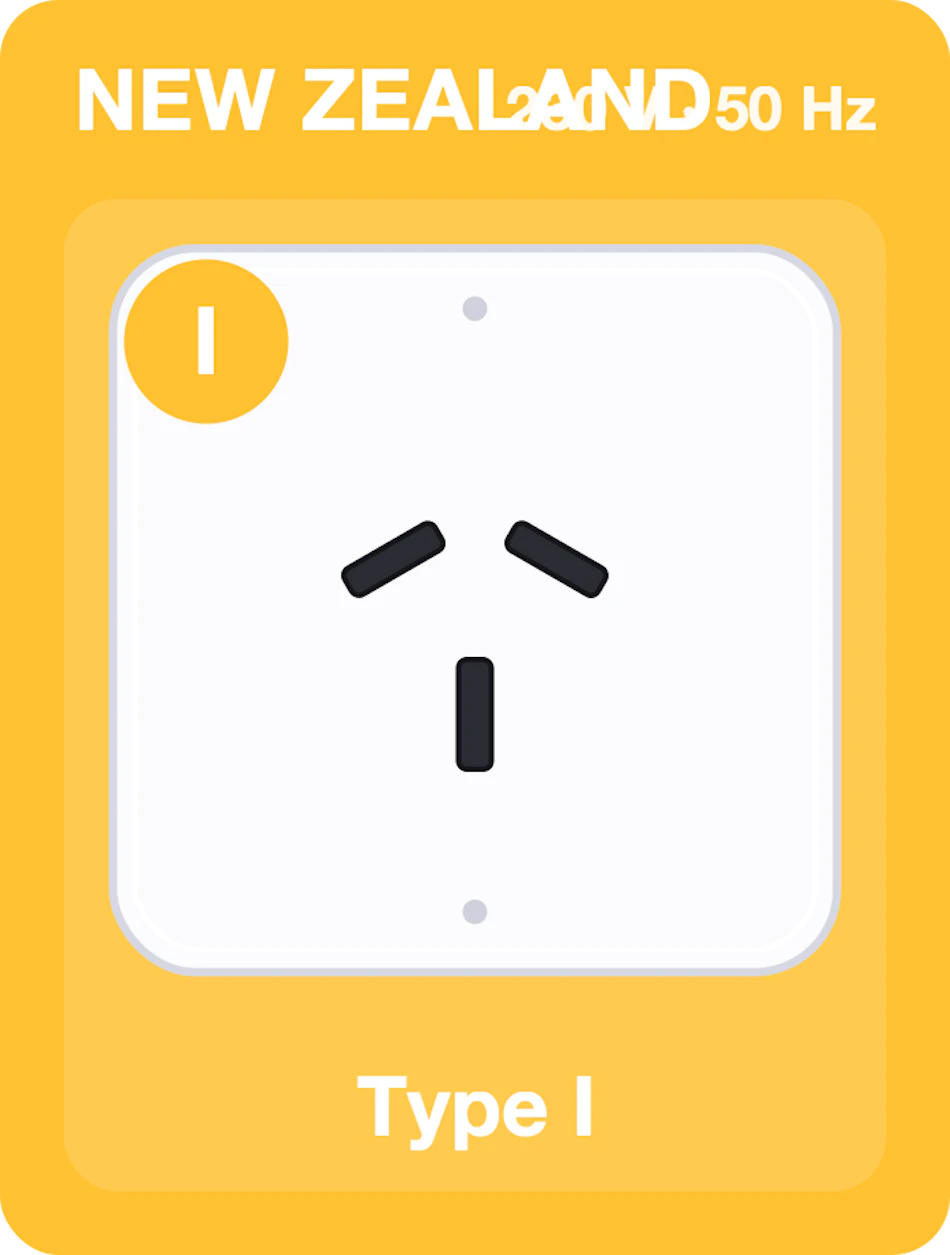
Sockets: Type I. Supply: 230 V, 50 Hz. Identical to Australia. One adapter covers both countries.
AU plugs fit without an adapter; UK, EU and US plugs need one. See our New Zealand tour.
Fiji
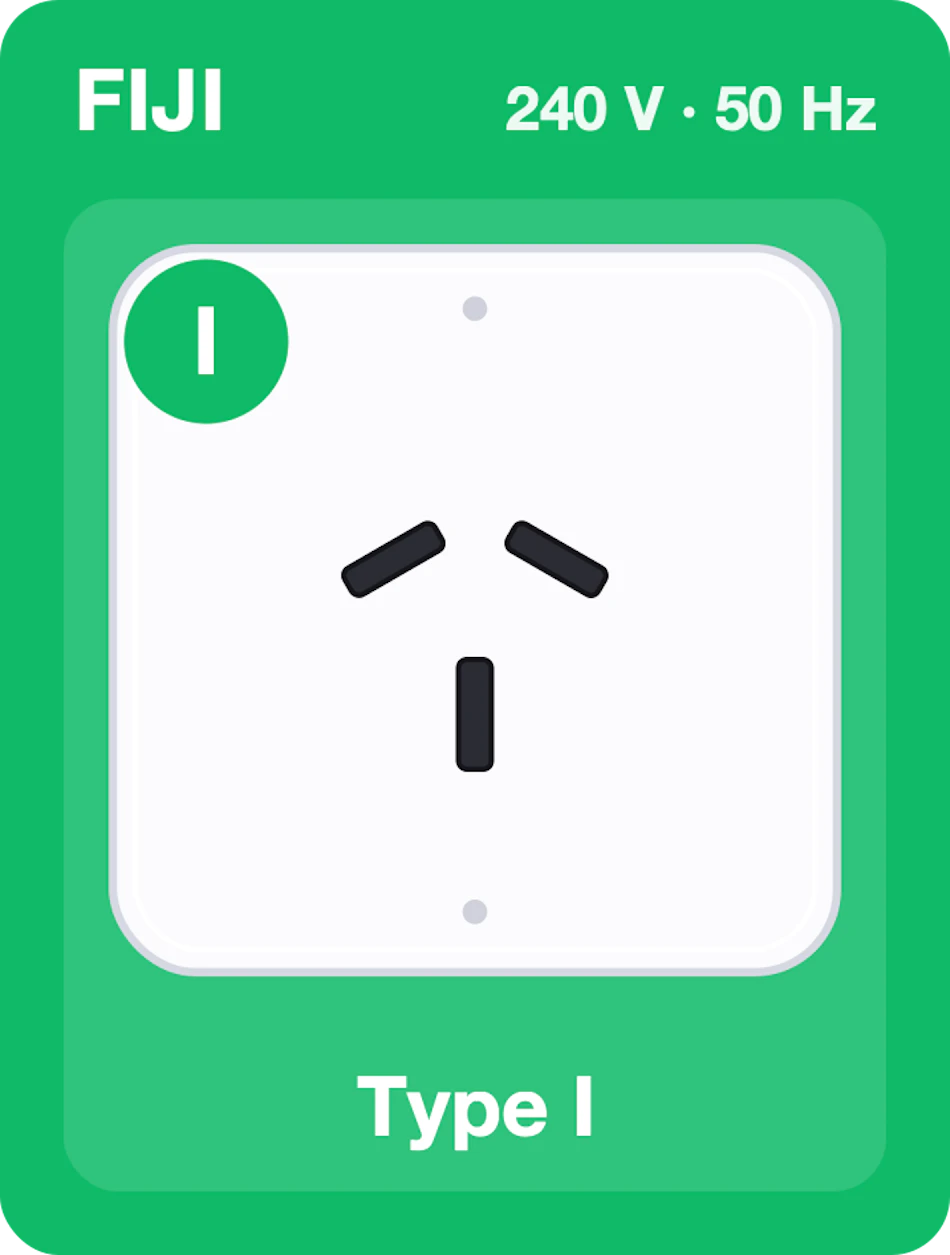
Sockets: Type I. Supply: 240 V, 50 Hz. Australian-style Type I sockets. Bring one Type I adapter for the whole South Pacific.
AU plugs fit without an adapter; UK, EU and US plugs need one. See volunteering in Fiji.
The Americas
Mexico
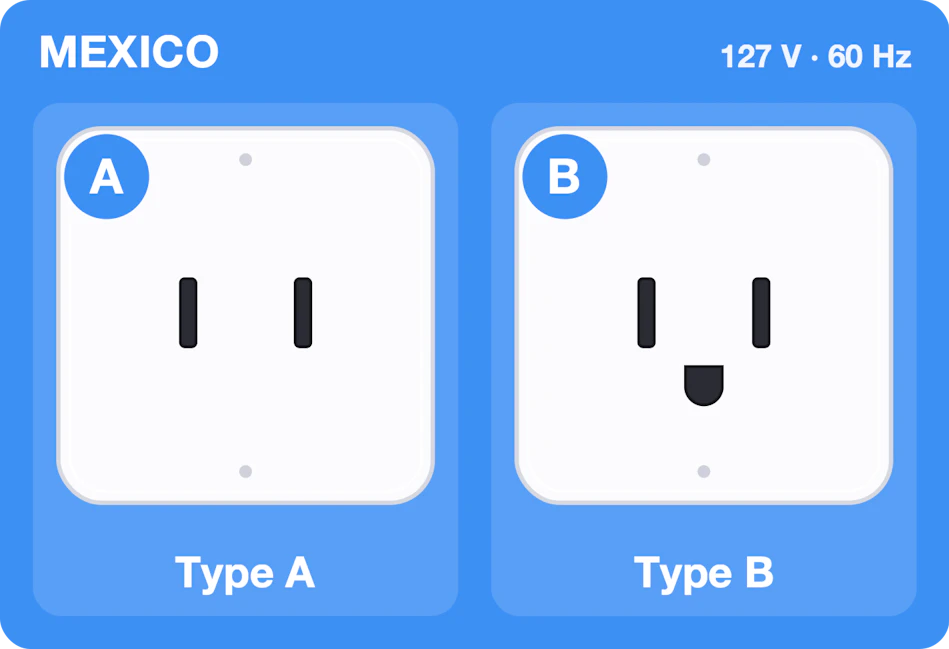
Sockets: Type A, B. Supply: 127 V, 60 Hz. US-style sockets at 127 V. Grounded Type B sockets are less common in older buildings, so a plug with a third pin may not fit.
US plugs fit without an adapter; UK, EU and AU plugs need one. See our Central America tours.
Belize
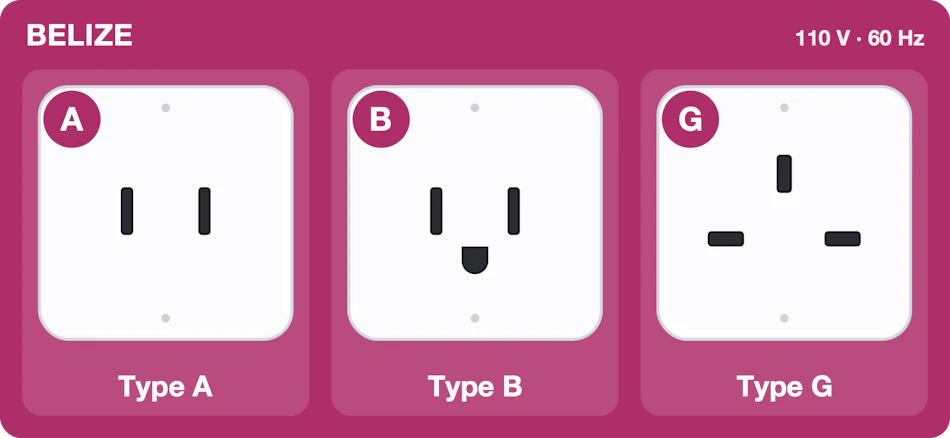
Sockets: Type A, B, G. Supply: 110 V, 60 Hz. Mostly US-style at 110 V, with the odd UK-style Type G left over from British rule.
UK and US plugs fit without an adapter; EU and AU plugs need one. See our Central America tours.
Guatemala
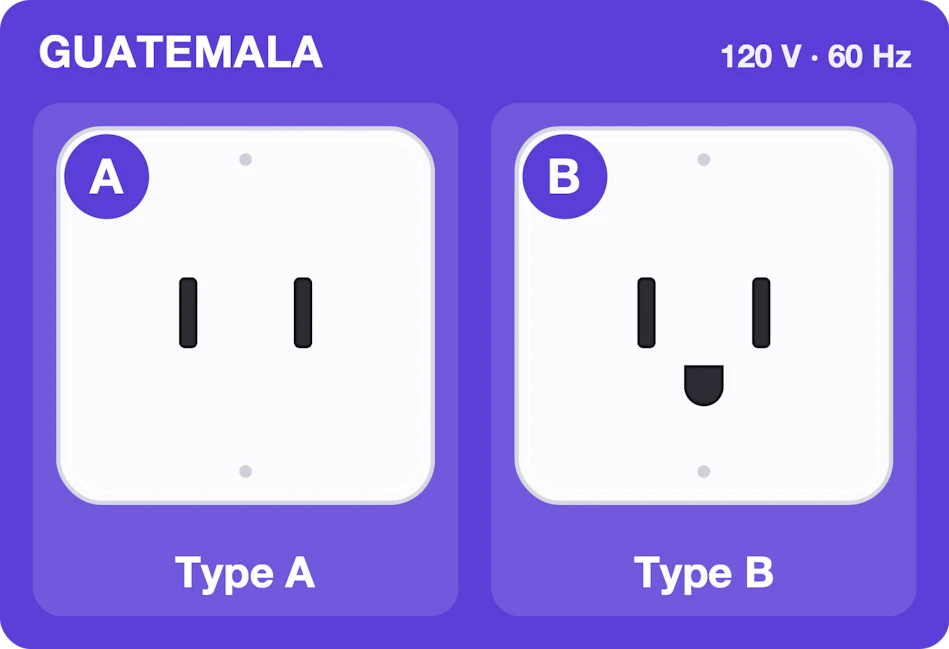
Sockets: Type A, B. Supply: 120 V, 60 Hz. US-style sockets at 120 V. Ungrounded Type A is the most common.
US plugs fit without an adapter; UK, EU and AU plugs need one. See our Central America tours.
Costa Rica
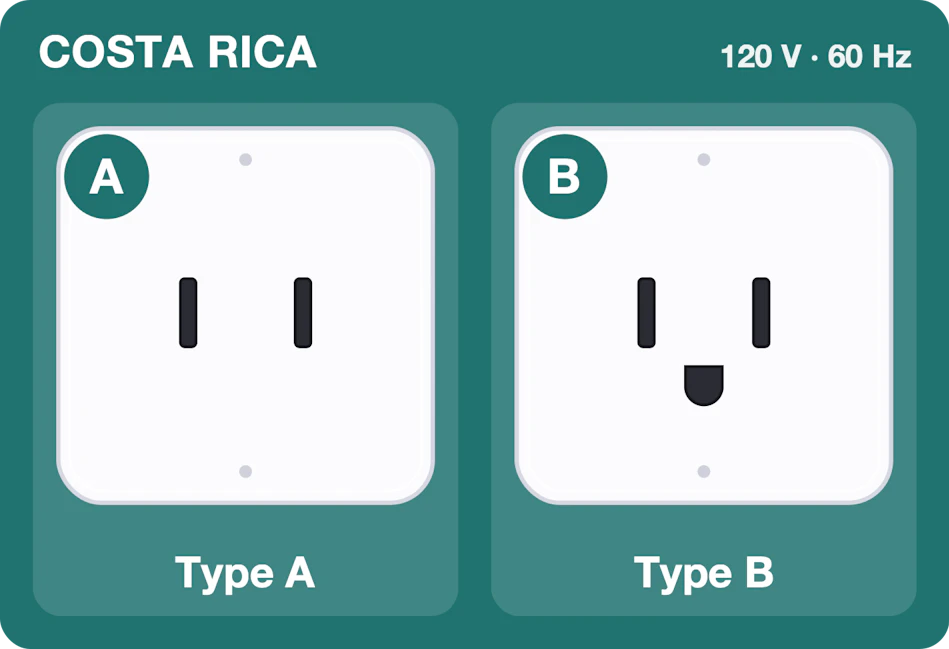
Sockets: Type A, B. Supply: 120 V, 60 Hz. US-style sockets at 120 V. A US or Canadian plug goes straight in.
US plugs fit without an adapter; UK, EU and AU plugs need one. See our Costa Rica tour.
Colombia
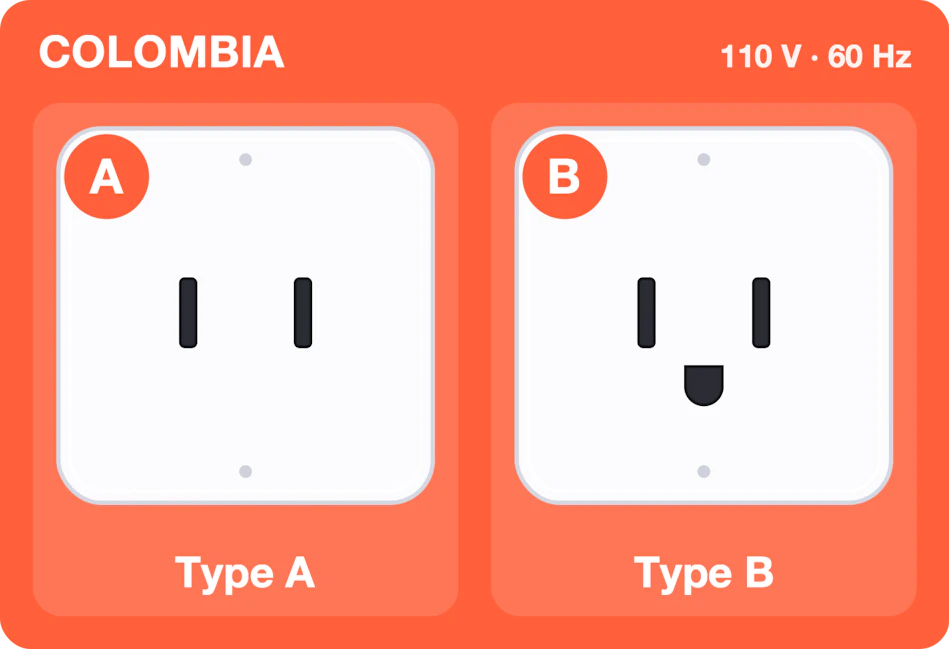
Sockets: Type A, B. Supply: 110 V, 60 Hz. US-style sockets at 110 V.
US plugs fit without an adapter; UK, EU and AU plugs need one. See our Colombia tour. Related: Colombia visa guide.
Ecuador (Galápagos)
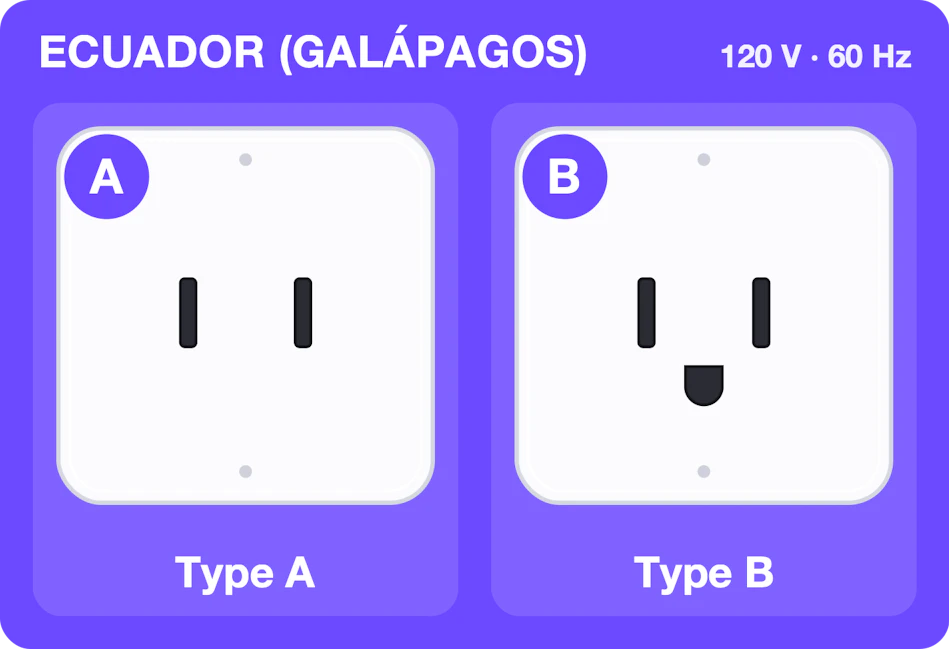
Sockets: Type A, B. Supply: 120 V, 60 Hz. US-style sockets at 120 V, on the mainland and in the islands. Boats in the Galápagos often run limited power, so charge when you can.
US plugs fit without an adapter; UK, EU and AU plugs need one. See our Galápagos tour.
Peru
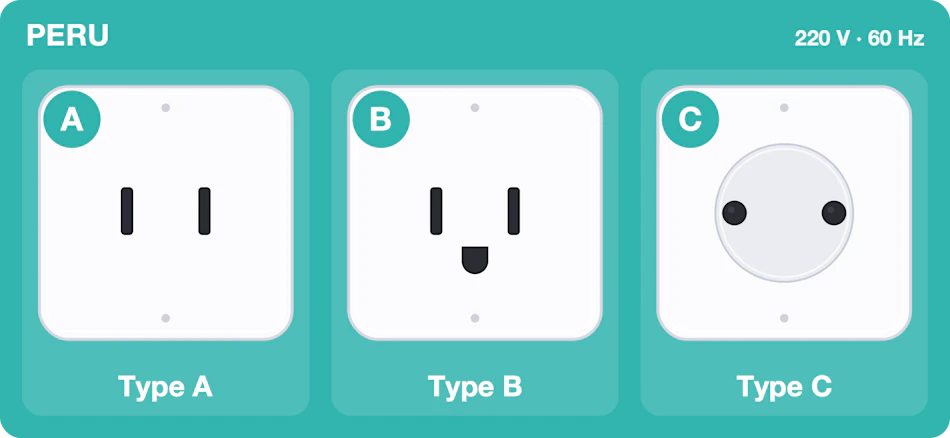
Sockets: Type A, B, C. Supply: 220 V, 60 Hz. Sockets take both US flat pins and European round pins, but at 220 V, so a US hair dryer is not safe here.
EU and US plugs fit without an adapter; UK and AU plugs need one. See our Peru tour.
Brazil
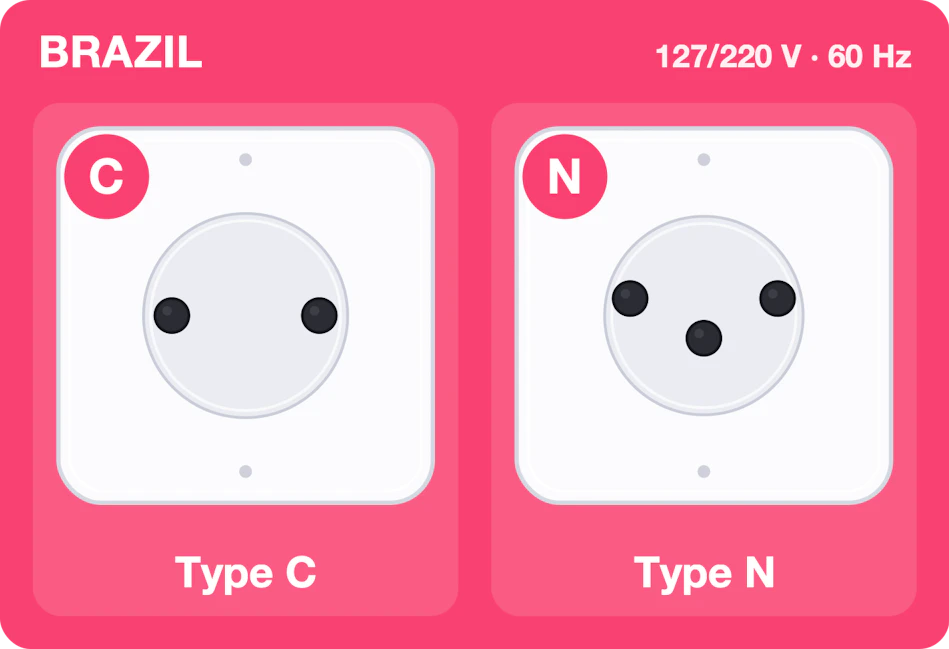
Sockets: Type C, N. Supply: 127/220 V, 60 Hz. Brazil has its own three-round-pin Type N socket, which also takes a Europlug. Voltage varies by state: Rio is 127 V, Brasília 220 V.
EU plugs fit without an adapter; UK, US and AU plugs need one. See our Brazil tour. Related: Brazil visa guide.
Argentina
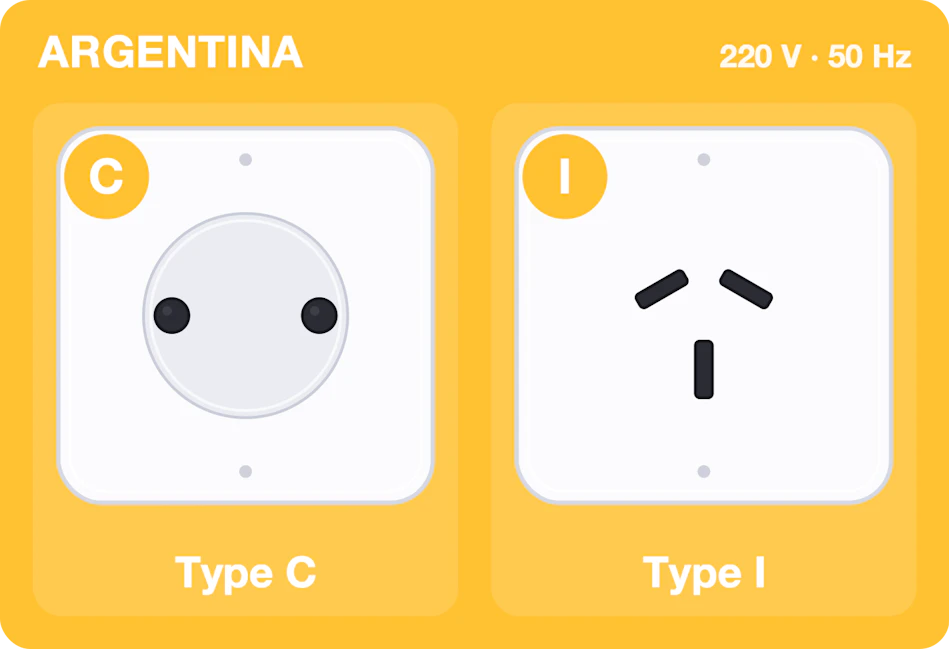
Sockets: Type C, I. Supply: 220 V, 50 Hz. The slanted-pin Type I socket, like Australia's but wired the other way round, plus older two-pin sockets that take a Europlug.
EU and AU plugs fit without an adapter; UK and US plugs need one. See our South America tours.
Middle East and Africa
Egypt
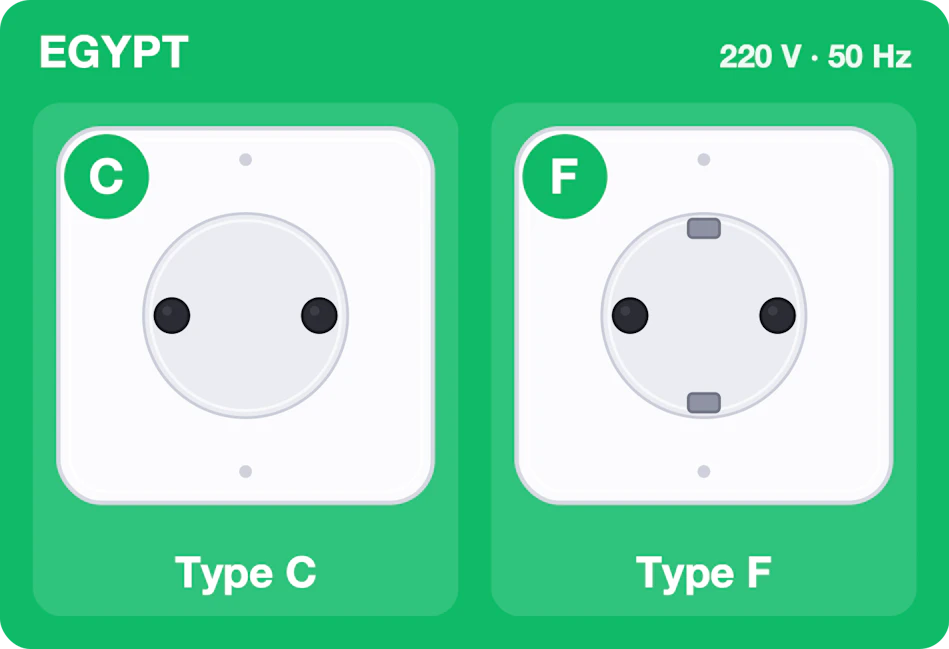
Sockets: Type C, F. Supply: 220 V, 50 Hz. European round-pin sockets throughout.
EU plugs fit without an adapter; UK, US and AU plugs need one. See our Egypt tour.
Jordan
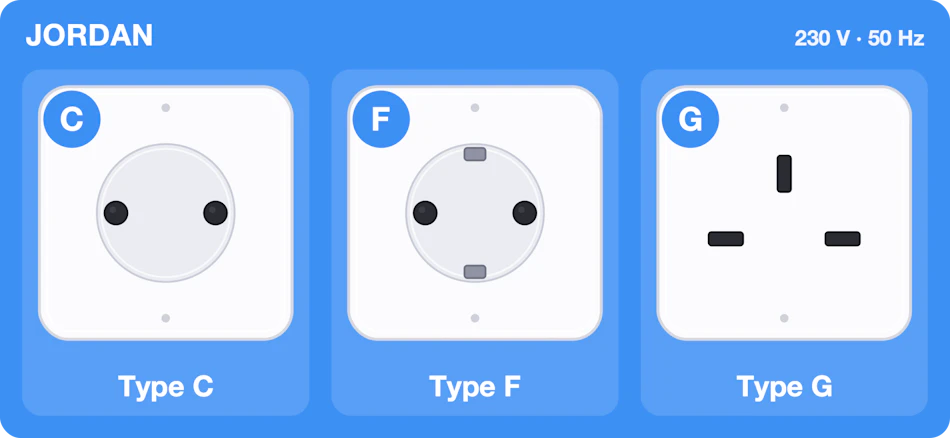
Sockets: Type C, F, G. Supply: 230 V, 50 Hz. A genuine mix. Newer hotels have UK Type G, older ones European round-pin. Pack both or a universal adapter.
UK and EU plugs fit without an adapter; US and AU plugs need one. See our Jordan tour. Related: Jordan visa guide.
Morocco
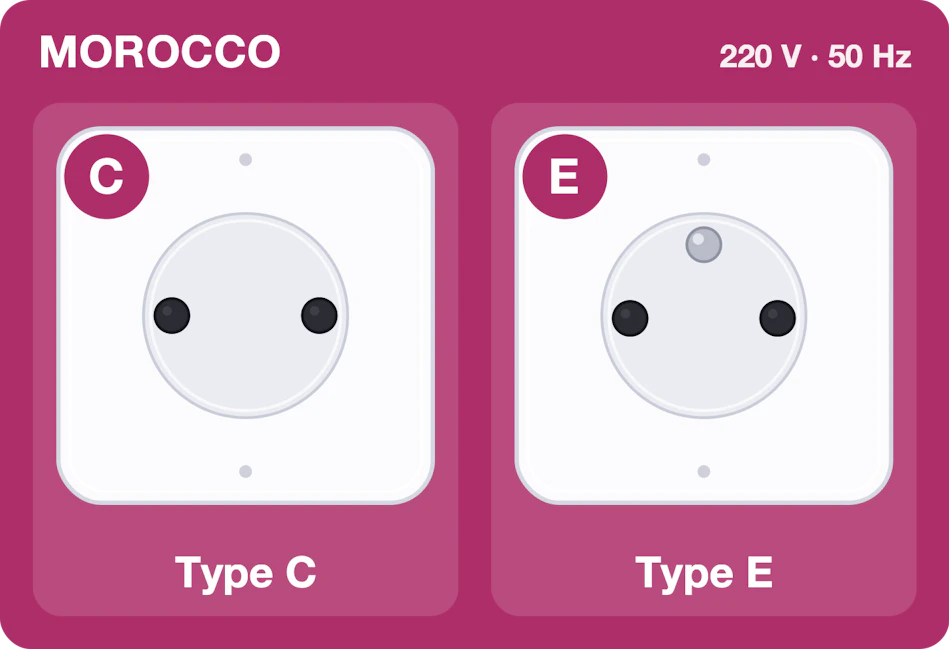
Sockets: Type C, E. Supply: 220 V, 50 Hz. French-style sockets with the earth pin sticking out. A Europlug or French plug fits directly.
EU plugs fit without an adapter; UK, US and AU plugs need one. See our Morocco tour. Related: Morocco weather guide.
South Africa
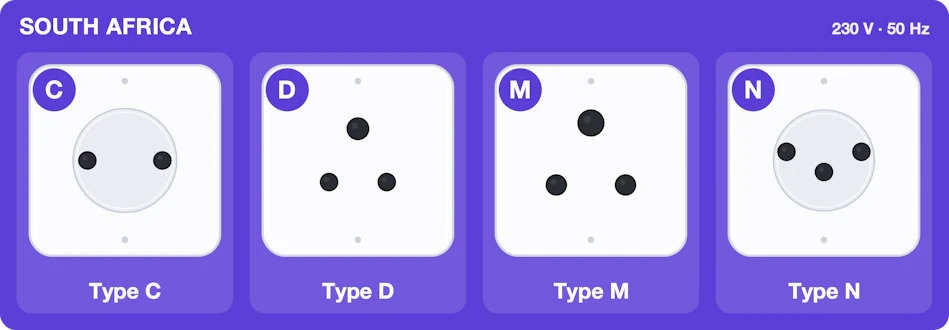
South Africa is 230 volts at 50 Hz and has the most awkward sockets on this page. The old standard is the huge three-round-pin Type M, the new one the smaller Type N, and hotels usually add a Type C outlet for Europlugs. UK, US and Australian plugs all need an adapter, and Type M adapters are hard to find outside the country, so buy one before you fly or pick one up at Johannesburg airport.
EU plugs fit without an adapter; UK, US and AU plugs need one. See our South Africa tour.
Tanzania (Zanzibar)
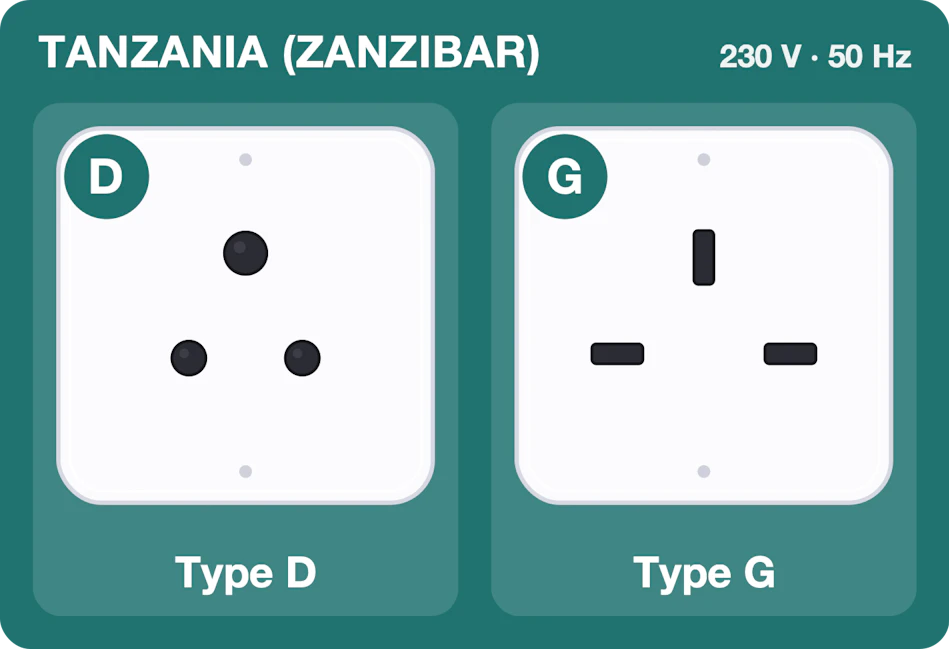
Sockets: Type D, G. Supply: 230 V, 50 Hz. UK-style Type G is the norm, with older round-pin Type D in some buildings. A UK plug usually goes straight in.
UK plugs fit without an adapter; EU, US and AU plugs need one. See volunteering in Zanzibar.
Cape Verde
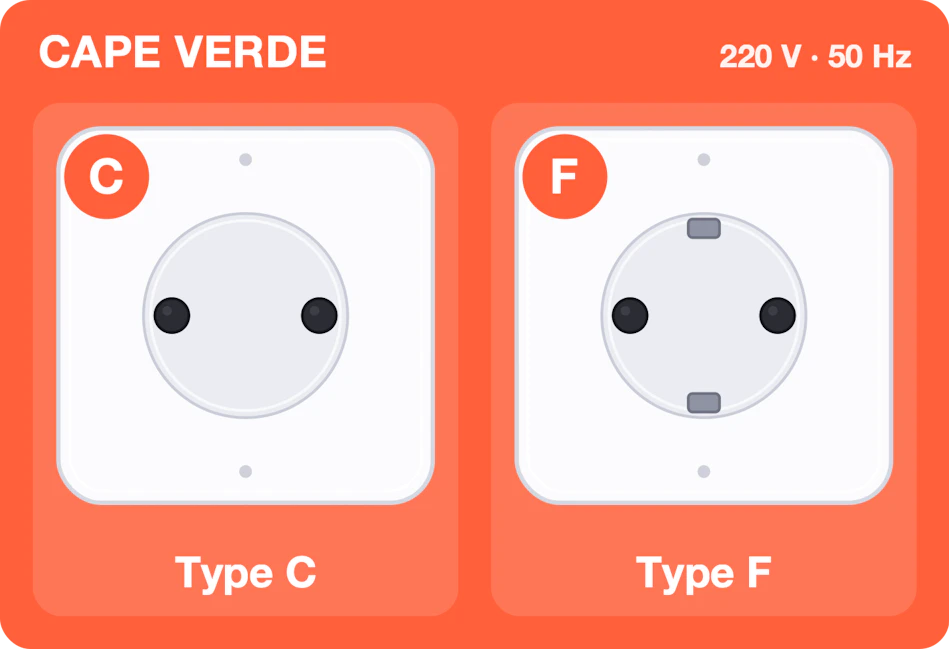
Sockets: Type C, F. Supply: 220 V, 50 Hz. European round-pin sockets, as in Portugal.
EU plugs fit without an adapter; UK, US and AU plugs need one. See volunteering in Cape Verde. Related: Cape Verde weather guide.
Europe
Continental Europe is the easy one: 230 V, 50 Hz and the round-pin Type C and F sockets almost everywhere, so a single Europlug adapter covers every stop on our Europe tour, Croatia, Greece and Bulgaria. UK, US and Australian plugs need an adapter throughout.
- Croatia: Type C, F. Standard European round-pin sockets.
- Greece: Type C, F. Standard European round-pin sockets.
- Bulgaria: Type C, F. Standard European round-pin sockets.
- Italy: Type C, F, L. Italy's own three-pins-in-a-row Type L sits alongside the usual European sockets. A Europlug fits either.
- Austria: Type C, F. Standard European round-pin sockets.
- Hungary: Type C, F. Standard European round-pin sockets.
- Slovenia: Type C, F. Standard European round-pin sockets.
What to pack
- One universal travel adapter with sliding pins for Type A, C, G and I. That combination fits every socket on this page except the big South African Type M, and most universal adapters carry a USB-C and USB-A port too.
- A multi-port USB charger. Hostel dorms and sleeper trains ration sockets. One adapter feeding a four-port charger beats four adapters fighting for the wall.
- A power bank for Nepal, the Galápagos and long bus days anywhere. Rules limit power banks to hand luggage and to 100 Wh, which is about 27,000 mAh.
- A second adapter if you are on a trip of three weeks or more. They get left in walls.
- Nothing that heats up unless it is dual-voltage. See the voltage section.
Tip: Buy before you fly. Adapters at the destination are cheap but flimsy, and the two that are genuinely hard to find abroad are South Africa's Type M and Japan's earthed Type B.
Frequently asked questions
Do UK plugs work in Thailand?
No. Thailand's sockets take American flat pins and European round pins but not the UK's rectangular three-pin. You need a Type A or Type C adapter; any universal adapter includes one.
What plug type does Bali use?
Type C and Type F, the European round-pin sockets, at 230 V. A European plug fits directly; UK, US and Australian plugs need an adapter.
Is Thailand 220 V or 230 V?
The official supply is 230 V at 50 Hz, though older guides say 220 V. Either way it is the same as the UK and Europe, so a dual-voltage charger needs only an adapter.
Can I use my hair straighteners in Southeast Asia?
If they are from the UK, Europe or Australia, yes, with an adapter. If they are from the US or Canada, only if the label says 100-240 V. A 120 V-only appliance plugged into a 230 V socket will fail, sometimes with smoke.
Do I need a voltage converter for Japan?
Not for chargers, which all accept 100 V. Hair dryers and straighteners from Europe will run at about half power. A converter is rarely worth the weight; buy a cheap dryer locally or use the hotel's.
Can I buy an adapter when I arrive?
Usually, at the airport or a convenience store, but the quality is poor and the choice is limited to the local socket type. Buy a universal adapter before you leave and pick up a local spare if you lose it.
Are hotel sockets in Asia universal?
Often, in hotels built after about 2010, and always in the better ones. Hostels, guesthouses, trains and buses are not. Plan for the country's socket type, not the hotel's.
Why book with Backpacking Tours?
We have run small-group trips for solo travellers aged 20 to 45 since 2013, across all 36 of the countries on this page. Airport transfers, in-country transport, accommodation and every listed activity are included, and your guide has an adapter when you have left yours in a hostel wall. Every trip is held with a small deposit and the balance is due 60 days before you go.
Ready to see it for yourself? Let's go!
From Bulgaria's slopes to South Africa's savannah, your next adventure is waiting.