In short: Vietnamese etiquette centres on respect, especially for elders, and on keeping things calm and friendly. Greet the oldest person first, take your shoes off at the door, cover your shoulders and knees at pagodas, never stand chopsticks upright in rice, pass things with both hands, and never lose your temper in public.
Vietnamese customs and etiquette grow out of two things: respect for family and elders, shaped by centuries of Confucian tradition, and a strong preference for harmony over confrontation. Vietnam is also one of the friendliest countries in Asia to travel in. People are curious, quick to laugh and forgiving of foreigners who get things wrong.
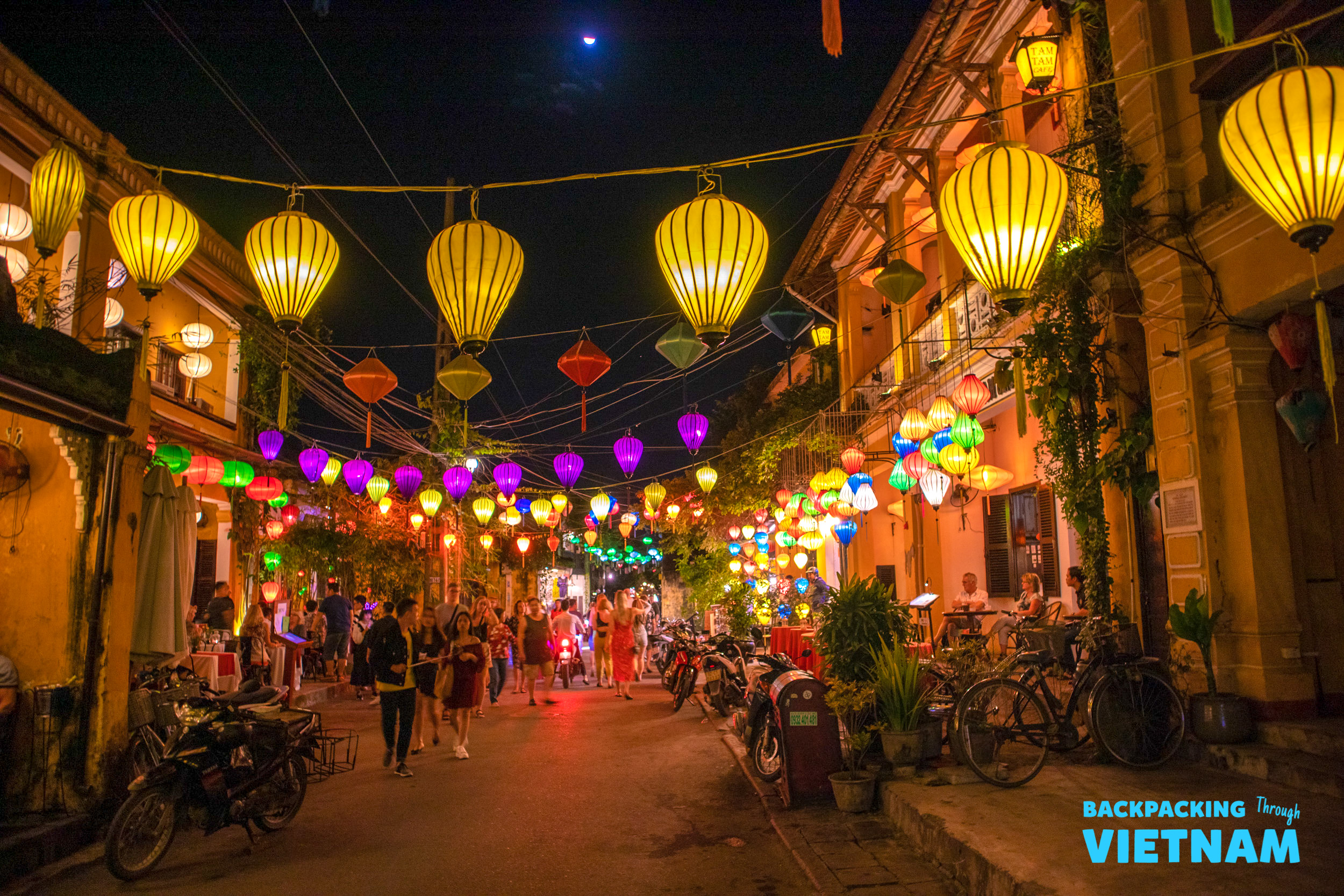
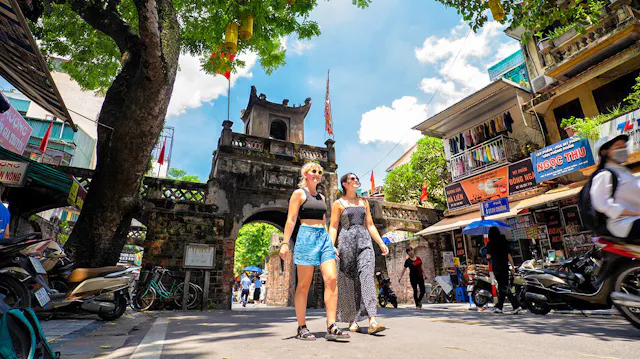
A morning in Hanoi's Old Quarter
You will not be judged for small mistakes. But knowing these 12 customs will get you warmer welcomes, better prices and far fewer awkward moments, from the street food stools of Hanoi to a homestay in the hills.
Meeting people
1. Greet the eldest first
Age earns respect in Vietnam. When you meet a group or a family, greet the oldest person first. A handshake is normal, often with both hands and a small nod, and some women prefer a nod alone. "Xin chao" works for everyone.
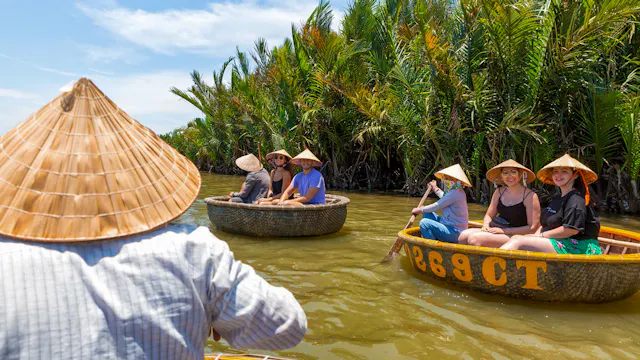
Learning to make traditional conical hats
2. Expect personal questions
How old are you? Are you married? What do you earn? These are not rude here. The Vietnamese language uses different words for "you" depending on whether someone is older or younger, so people ask your age simply to know how to address you. Answer or laugh it off, whichever you prefer.
3. Save face, yours and theirs
Raising your voice, showing anger or criticising someone in front of others causes everyone to lose face, and it will not get you what you want. If something goes wrong, stay calm, smile and keep talking. A problem that seems stuck usually gets solved quietly a few minutes later.
4. Mind heads, feet and hands
Do not touch anyone's head, including children's. It is the most sacred part of the body.
Do not point your feet at people or at altars, and do not rest them on tables or seats.
Pass things with both hands, or with your right hand, especially to someone older.
Beckon with your palm down, waving your fingers towards you. Palm up with a curled finger is how you call a dog.
Homes, pagodas and altars
5. Shoes off at the door
Take your shoes off before entering a home, a homestay and the inner halls of temples. If there is a pile of sandals by the door, add yours to it. Some small shops and guesthouses follow the same rule.
6. Respect the family altar
Almost every home, shop and restaurant has an altar to the family's ancestors, with incense, fruit and sometimes a can of beer or a packet of cigarettes left as offerings. Do not touch it, do not move the offerings, and do not sit with your back or feet towards it.
7. Dress for pagodas and temples
Cover your shoulders and knees when you visit religious and cultural sites. You will usually see a sign at the entrance spelling out the dress code. Take off your hat, keep your voice down, and do not photograph people while they are praying.
The strictest rules are at the Ho Chi Minh Mausoleum in Hanoi: modest dress, silence, hands out of pockets and no photographs inside. Guards do enforce them.
Tip: A light scarf or a long-sleeved shirt in your day bag covers you for any pagoda you stumble across. It is handy on icy air-conditioned buses too, as our guide to Vietnam's overnight buses explains.
Never stand your chopsticks upright in a bowl of rice. It looks like the incense sticks burned for the dead and is the one mistake that makes people wince. Lay them across your bowl or on the rest instead. Do not tap them on the bowl or use them to point.
9. Share, wait and toast
Meals are shared. Dishes go in the middle of the table and everyone helps themselves, a little at a time, into a small bowl of rice. Wait for the oldest person to start eating. If someone places food in your bowl, it is a compliment.
Drinking is social and comes with toasts. When the table shouts "mot, hai, ba, yo!" (one, two, three, cheers), join in. If you are drinking beer with locals, expect it to happen every few minutes.
Vietnam runs on coffee as much as beer. Sitting on a tiny plastic stool with a ca phe sua da, strong iced coffee with condensed milk, is one of the country's great pleasures and a good way to watch the street go by.
Money, markets and photos
10. Bargain with a smile
Haggling is expected at markets and with motorbike taxis and cyclos, and it is meant to be good-natured. Offer around half, meet somewhere in the middle, and walk away politely if the price does not suit you. Restaurants, supermarkets and shops with price tags are fixed.
Chatting with a market vendor in Hoi An
Take care with the notes. Vietnamese dong comes with a lot of zeros, and the 20,000 and 500,000 notes are both blue. Check before you hand one over. Change money only at banks or official exchange counters; changing it anywhere else is illegal. A travel card such as Wise keeps things simple at ATMs.
11. Tipping
Tipping is not a traditional part of Vietnamese culture, but it is increasingly common in tourist areas and always appreciated. In restaurants, leaving the small change or 20,000 to 50,000 dong is a kind gesture. For a massage, 50,000 to 100,000 dong is typical. With taxis and ride apps, rounding up is plenty.
12. Ask before you photograph people
Most people are happy to be photographed if you ask, and a smile and a gesture towards your camera is all it takes. This matters most in the ethnic minority villages of the northern mountains, where visitors with cameras are a daily event. Do not photograph military sites or border posts.
Tet: the one holiday to plan around
Tet, the Lunar New Year, is the most important celebration of the Vietnamese year, and it changes how the whole country works. In 2027 it falls on 6 February. Families travel home, so trains, buses and flights sell out weeks ahead, and many shops, restaurants and museums close for several days.
If you are in Vietnam for Tet, you will see peach blossom and kumquat trees outside every house and children being given lucky money in red envelopes. The streets are quiet for a day or two, then burst back to life. Wish people "Chuc mung nam moi" (happy new year) and you will be offered more food than you can eat.
Losing your temper in public, touching someone's head, pointing your feet at people or altars, and standing chopsticks upright in a bowl of rice are all considered rude. Showing respect to older people matters a great deal.
What should I wear to temples and pagodas in Vietnam?
Cover your shoulders and knees, remove your hat, and take off your shoes before entering inner halls. Most religious and cultural sites have a sign at the entrance showing the dress code.
Do you tip in Vietnam?
Tipping is not traditional but is increasingly common in tourist areas and always appreciated. Leave the small change or 20,000 to 50,000 dong in restaurants, 50,000 to 100,000 dong after a massage, and round up taxi fares.
Is it rude to bargain in Vietnam?
No. Bargaining is expected at markets and with motorbike taxis, as long as it stays friendly. Shops with price tags, supermarkets and restaurants have fixed prices.
When is Tet in 2027?
Tet, the Vietnamese Lunar New Year, falls on 6 February 2027. Transport sells out and many businesses close for several days around it, so book ahead if you are travelling then.
Can I bring a vape to Vietnam?
No. Vapes and related products are banned in Vietnam. You cannot bring them into the country or buy them there.
Why book with Backpacking Tours?
Vietnam is at its best with someone local to translate the menu, the customs and the traffic. Our Vietnam trips are led by a group leader or local guide and are for travellers aged 20 to 45, most of whom come solo, in groups of up to 20 on most departures. Accommodation, transport, the main activities and a set number of meals are included.
Be first in line. Waitlist members get early access to the sale, so you can grab the departure you want before places go.
You're on the list! We'll email you as soon as the sale starts.
By signing up you agree that we may send you marketing emails. You can unsubscribe at any time.
We use cookies
They keep the site running, remember your currency and help us show you trips you’ll actually want. Accept all for the best experience, or read our cookie policy.
Strictly necessary
Always on
Logins, your basket and keeping the site secure. Can’t be switched off.
Functional
Our live chat, so a conversation with the team carries on from page to page.
Analytics
Lets our own stats recognise your browser from visit to visit. Without it we only count visits anonymously.
Marketing
Lets us show you relevant trips on social media and other sites, and see which ads work.