Up to 40% off!

Up to 40% off!

Turtle Conservation: Zanzibar

Turtle Conservation: Zanzibar is a volunteer placement in Makunduchi, from $750 a week per person with a $350 deposit. You help rescue, rehabilitate and release endangered sea turtles, and protect the beaches they nest on. Stays run 1-12 weeks and suit travellers aged 18-38, flying into Stone Town. Start dates run from 20 September 2026.

  • 18 meals (3 on weekdays, 2 at weekends)
  • Accommodation, Sunday to Saturday noon
  • Airport transfer (Arrivals)
  • All program materials, tools and equipment
  • Supervision by experienced local project coordinators
  • 24/7 local team support
  • No hidden charges or application fees
  • Meet volunteers from all over the world
  • International flights
  • Visa costs
  • Travel Insurance
  • Personal expenses
  • Additional tours or activities
  • Airport Transfer (Departing)
from$750Per Week
Pay $350 deposit

Rescue, rehabilitate and release sea turtles on Zanzibar's south-east coast.

  • Length1-12 Weeks
  • Starting PointStone Town
  • Ending PointMakunduchi
  • Airport TransferPick-up only
  • Avg. Group Size6-20
  • Avg. Age18-38
  • No. Of Meals18

Join Your Backpacking Community

Keep up to date with us on social media.

Route Map

Zanzibar

2 stops

Tour Itinerary

Aerial view of Zanzibar's historic Stone Town, featuring a sandy beach, turquoise ocean, and many boats.
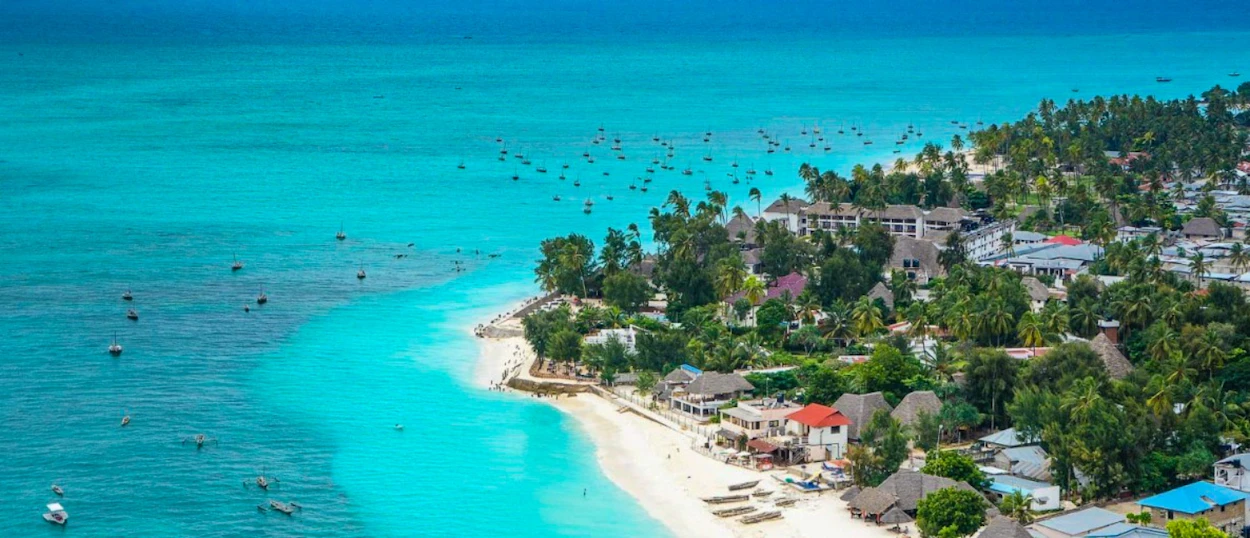
Aerial view of turquoise ocean, white sand beach, and a tropical town with many boats in Zanzibar.
A white house with a blue roof and a carved door sits under a spreading almond tree.
A white volunteer house with a blue tin roof stands behind a rustic garden fence.
Two wooden bunk beds made up with floral bedding stand beside a bright barred window.
Day 1

Karibu Zanzibar

You will be met at Zanzibar's airport during the regular pick-up window and driven down to Makunduchi on the south-east coast. The rest of the afternoon is yours to settle in, unpack and recover from the flight. Dinner is with the other volunteers — some of whom will have been here a while and will tell you exactly what tomorrow looks like.

  • Meals IncludedBrunch, Dinner
  • Room TypeVolunteer House
  • Activities IncludedAirport Transfer
Volunteers and local staff sit together under a shelter for a briefing.
Rectangular concrete turtle tanks under a high thatched roof at the conservation site.
The group sits around the shaded courtyard of the volunteer house for a briefing.
A local guide shows two volunteers something he has picked up from the shore.
A white volunteer house with a blue tin roof stands behind a rustic garden fence.
Two wooden bunk beds made up with floral bedding stand beside a bright barred window.
A white house with a blue roof and a carved door sits under a spreading almond tree.
Day 2

Orientation and Your First Look at the Project

The morning is your full orientation: house rules, health and safety, cultural do's and don'ts for life in a Zanzibari village, and an introduction to sea turtle conservation and the site you will be working on. After lunch there is a tour of the local area and a hand with the practical things — a local SIM card, where to find what — before you walk down to meet the conservation team and see what the week holds.

  • Meals IncludedBreakfast, Lunch, Dinner
  • Room TypeVolunteer House
  • Activities IncludedOrientation, Local Area Tour, Project Introduction
Volunteers lean over the tank wall to feed seaweed to the green turtles below.
Three of the team wade the reef flat at low tide under a wide cloudy sky.
Close-up of a giant tortoise eating fresh green leaves on a textured ground.
A volunteer lifts a turtle in a shallow tank while the others watch from the side.
Volunteers and villagers sit on the red earth weaving long palm fronds into matting.
Two wooden bunk beds made up with floral bedding stand beside a bright barred window.
A white volunteer house with a blue tin roof stands behind a rustic garden fence.
A white house with a blue roof and a carved door sits under a spreading almond tree.
Day 3 - 6

Turtle Care, Beaches and Mangroves

These are the working days, and they follow the turtles rather than a fixed timetable. Mornings are the core routines: feeding on seaweed collected that day, cleaning enclosures, water quality checks and measuring the young turtles for the project's records. Afternoons move between beach cleanups and the sorting and recycling that follows them, seaweed plantation work, and preparing materials for conservation awareness sessions. Mangrove conservation runs twice a month and lands in this stretch when the schedule allows. By Friday you will be taking measurements on the adult turtles, recording behaviour, and helping host visits from local students.

  • Meals IncludedBreakfast, Lunch, Dinner
  • Room TypeVolunteer House
  • Activities IncludedFeeding, Enclosure Cleaning, Water Quality Checks, Beach Cleanups, Seaweed Collection, Mangrove Planting, Student Visits
Locals work with traditional boats on the vibrant turquoise waters of a sunny Zanzibar beach.
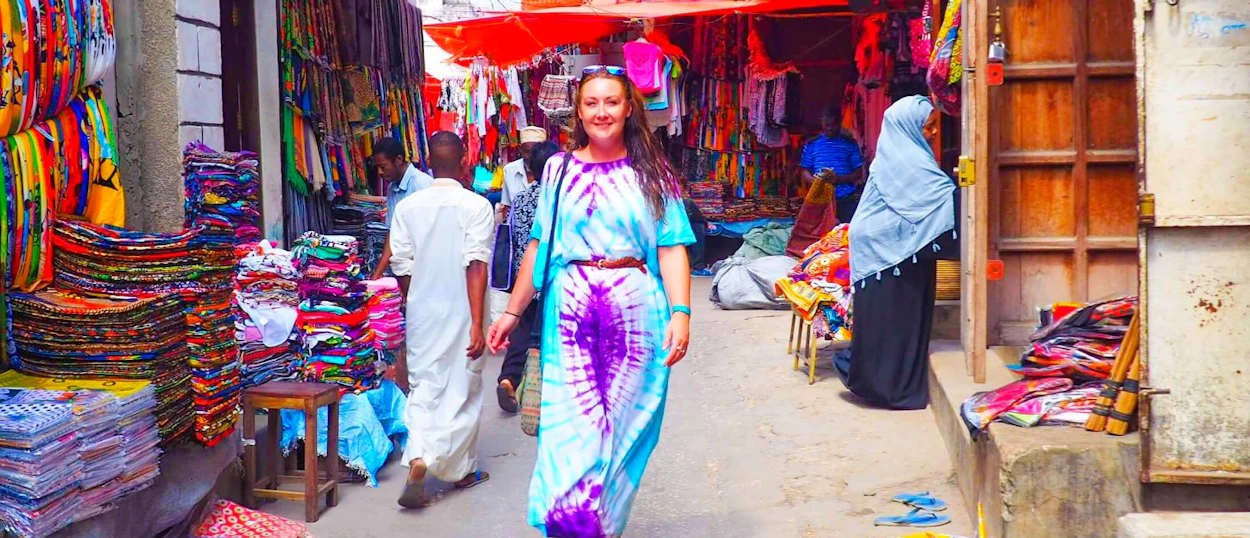
A smiling woman walks through a vibrant, colorful market street in Zanzibar, surrounded by fabrics.
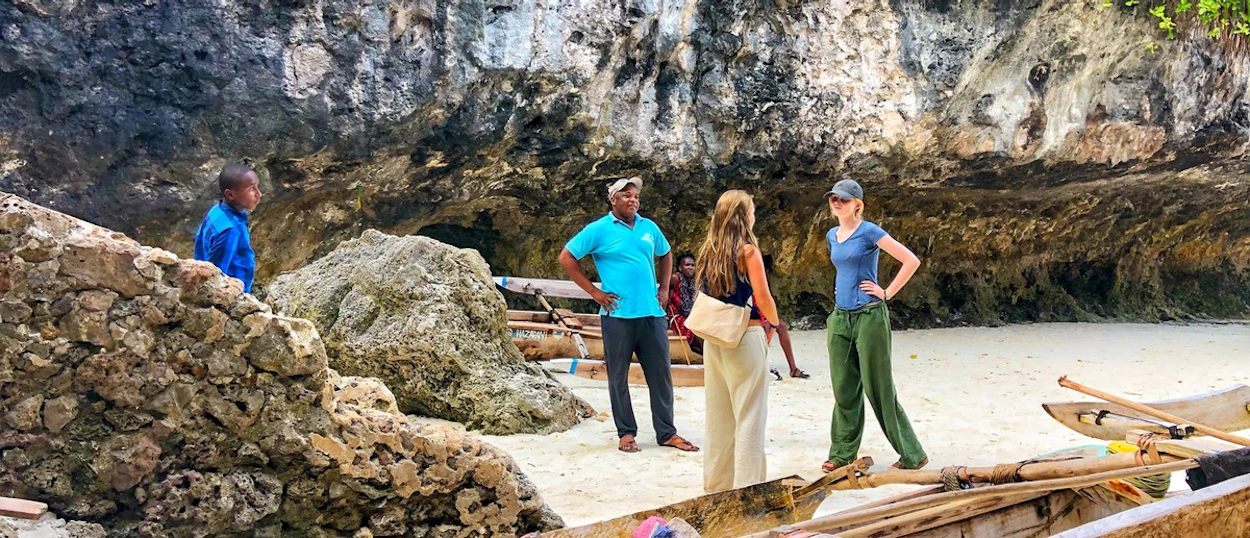
A guide and two volunteers stand among outrigger canoes on the sand below a coral cliff.
Volunteers stand chest deep in clear water beside a moored boat off the Makunduchi shore.
A fisherman and a volunteer move a loaded outrigger canoe down the sand towards the sea.
The blue canopy of a small boat frames bright turquoise water and the low green shore.
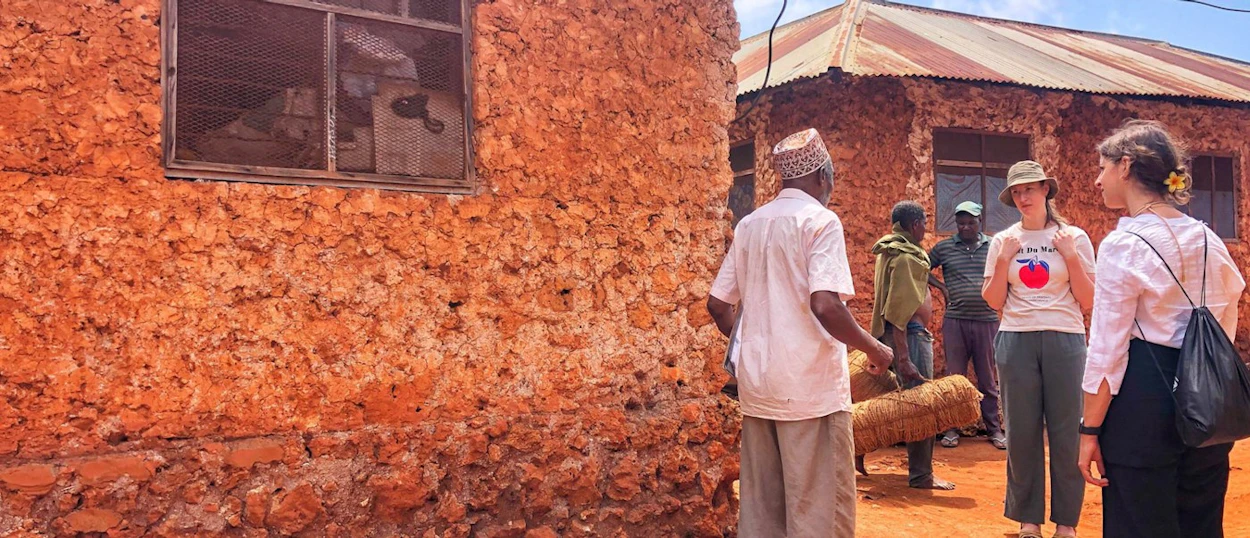
A guide and two volunteers stand beside the coral rag wall of a village house.
A volunteer cycles a red earth path through banana trees past a village house.
Dresses and printed cloth hang from a thatched craft stall on a sandy beach path.
A swimmer wades past a sea stack in a cove framed by an undercut coral cliff.
Outrigger canoes rest on the sand under coconut palms as the evening sky turns orange.
Stars fill the night sky above the pale sand and rocks of the Makunduchi shore.
People working on traditional dhow boats on a white sand beach with turquoise water in Zanzibar.
Day 7

Your Weekend

Breakfast, and then the week is yours. If you are staying on, the weekend is free time — Zanzibar's beaches, Stone Town, the spice farms and the reef are all within reach, and the team can point you at the good ones. If this was your week, checkout is at noon.

  • Meals IncludedBreakfast
  • Room TypeVolunteer House

Starting Dates

Optional Extras

$520
$690
$1330
$1950
$200
$60
$115

Program Description

Makunduchi sits on the south-east corner of Zanzibar, a fishing village where the reef comes close to shore and the Indian Ocean is at the end of the road. The sea turtle project here is community-run and works on three fronts at once: rescuing turtles that arrive injured, rehabilitating them until they are strong enough to go back, and protecting the nesting grounds they depend on.

Your days are spent alongside the local conservation team, doing the work that keeps the project running. You will feed turtles on seaweed collected that morning, clean and refill enclosures, check water quality, measure hatchlings for the project's records and keep the juvenile pens in the condition young turtles need to grow. It is practical, daily work, and it is the difference between a turtle that recovers and one that does not.

The coast gets the same attention. Beach cleanups run regularly, and what comes off the sand is sorted and recycled rather than simply moved somewhere else. Mangrove conservation runs twice a month, replanting the belt of forest that holds the shoreline together, slows erosion and shelters most of what breeds along this coast.

Sea turtles do not nest all year, so no two months here look alike. Some weeks are entirely rehabilitation and habitat work. Others bring nest monitoring, egg counts and — if the timing falls your way — hatchlings crossing the sand to the water. That variation is the honest shape of conservation work rather than a gap in the program.

There is a community side to it too. You may help with environmental awareness sessions or host visiting school groups, which is how the project builds the local knowledge that outlasts any one volunteer. And you live in the village while you do it, waking up to ocean views and settling into a daily rhythm that is not your own.

What You'll Be Doing

  • Feed and care for rehabilitating turtles, including collecting and preparing the seaweed they eat.
  • Clean and maintain enclosures, and check water quality in the tanks and juvenile pens.
  • Monitor nests and track hatchling activity — and, depending on the season, help hatchlings reach the ocean.
  • Record turtle measurements and behaviour for the project's ongoing monitoring.
  • Take part in regular beach cleanups, then sort and recycle what you collect.
  • Join mangrove conservation days, which run twice a month.
  • Support environmental awareness initiatives and visits from local students.
  • Work alongside the local conservation team, and adapt to what the tides, the weather and the nesting cycle allow on any given day.

A Typical Day

Three volunteers wade in turquoise shallows gathering seaweed into a red bucket to feed sea turtles in Zanzibar.

The turtle site is about 500m from the accommodation, so the day starts with a short walk rather than a commute.

  • 8:00 – Breakfast
  • 9:00 – Walk down to the sea turtle site
  • 9:30 – Morning turtle routines: feeding, cleaning, health checks
  • 12:30 – Back to the accommodation for lunch
  • 13:30 – Beach cleanup
  • 15:00 – Sorting and recycling what came off the beach
  • 16:00 – Free time, rest, or the beach
  • 18:00 – Dinner
  • 19:00 – Your evening

This is an example rather than a timetable. Tides, weather, the turtles themselves and the community's own calendar all move it around.

Aims & Objectives

  • Give endangered sea turtles the care they need to recover and return to the wild.
  • Keep the beaches and coastal waters around Makunduchi clean and healthy.
  • Build practical conservation skills and a working understanding of marine biology and the threats these animals face — pollution, fishing practices and a changing climate.
  • Show the local community and visitors why this work matters, and bring them into it.

Frequently Asked Questions

How can I prepare mentally?

Our Culture week program covers most of the topics including culture shock and how to adapt to Culture and Traditions. One should come with an open mind. We suggest you to go through the program guide.

Is airport transfer part of the package?

Your arrival transfer is included. You will be met at the airport and taken to your accommodation, so there is nothing to arrange for the journey in.

The departure transfer at the end, from your accommodation back to the airport, is not included. You can add it as an optional extra in your account, or make your own way.

Once you have booked your flights, log in to your account and add them under Flight Details so we know when you are landing.

How old do I have to be?

This program is for participants aged 18 to 65.

Under 18s can join with signed parental consent. Anyone over 65 needs medical clearance before travelling.

Do I need any experience or qualifications?

No. No qualification is required and no experience is expected — the local conservation team will show you everything in your first couple of days.

You need a basic level of English. On signing up we will ask for a copy of your passport and a criminal record check (CRB/DBS). No CV or resume is needed.

Do I need to be fit/in shape for my project?

You should be comfortable spending the day outdoors in warm, humid conditions, walking on uneven ground and sand, and lifting and carrying — seaweed, water, cleaning equipment.

None of it is strenuous, but it is physical and it is daily. Being adaptable matters just as much: tides, weather and the turtles' own condition change what happens on any given day, and there is teamwork involved in the student visits and the seaweed harvesting with the community.

What vaccinations do I need for Tanzania?

The vaccinations usually recommended before travelling to Tanzania are yellow fever, hepatitis A and B, typhoid, DTP (diphtheria, tetanus and pertussis), MMR (measles, mumps and rubella), meningitis and rabies. Malaria prevention is worth discussing as well.

This is guidance rather than medical advice. See your doctor or a travel clinic well before you fly, and check the current WHO guidance for Tanzania.