
Brazil's sheer size means its climate is incredibly diverse, offering everything from steamy Amazonian jungles to sun-drenched southern beaches. For independent travellers and backpackers, understanding these variations is crucial for planning the perfect adventure, ensuring you hit the right regions at the best time for your chosen activities. Timing your trip well can mean the difference between enjoying vibrant festivals under clear skies or navigating muddy trails during torrential downpours.


Brazil’s Seasons (Quick Version)
Brazil's vastness prevents a single, uniform climate, but we can broadly categorize the year into three main seasons that offer different experiences for backpackers across its diverse landscapes.
- Hot & Wet Season: Expect high temperatures, significant humidity, and frequent, often heavy, rainfall, particularly in the Amazon and central regions, though coastal areas also see increased showers.
- Transition Season: This season offers a mix of conditions, with generally milder temperatures and less intense rainfall than the peak wet season, creating pleasant conditions for exploring many areas.
- Dry & Mild Season: Characterized by drier weather and cooler temperatures, especially in the south and southeast, making it an ideal time for outdoor activities and exploring cities without extreme heat.
Brazil month by month, at a glance
Rio de Janeiro and the south-east coast, where our Brazil trips run: average daytime high, and each month's rain against the wettest month.
Amazon Basin
Northeast Coast
Southeast Coast
Our Brazil trips
Here are the 3 trips we run in Brazil.


Month-By-Month: Brazil Weather
To help you pinpoint the ideal time for your Brazilian adventure, here's a detailed breakdown of what you can expect month-by-month across this incredible country.
Brazil Weather in January
Hot, humid, around 30°C
January is peak summer, meaning hot and humid conditions across much of Brazil. Expect average daytime temperatures around 30°C in Rio de Janeiro and Salvador, often accompanied by heavy, short-lived afternoon downpours. The Amazon basin is firmly in its wet season, with high water levels perfect for boat trips but also intense humidity. Beaches like Copacabana and Ipanema are bustling.
In Southern Brazil, cities like Porto Alegre are just as hot, often above 30°C, with occasional summer storms. This is a popular time for domestic tourism, so expect higher prices and larger crowds in coastal areas.
Brazil Weather in February
Carnival heat, 30°C Avg
February remains hot and humid, with average temperatures consistently around 30°C in major cities like Rio and Salvador. This month is defined by Carnival, bringing vibrant celebrations but also peak crowds and prices. Rainfall continues to be significant in the Southeast and Amazon. Sea temperatures are warm, perfect for swimming along the coast.
While the Southeast pulsates with Carnival energy, the Pantanal is experiencing its wet season, making wildlife spotting more challenging but offering unique flooded landscapes. Bahia's coast, though warm, can also see heavy showers due to its tropical climate.
Brazil Weather in March
Sticky, wet, 29°C Avg
As summer draws to a close, March is still very warm, averaging 29-31°C in Rio and the Northeast. Humidity remains high, and while rainfall lessens slightly in some areas, it's still a wet month, particularly in the Amazon and parts of the Southeast. The intense heat can make strenuous activities challenging, but the lush landscapes are beautiful.
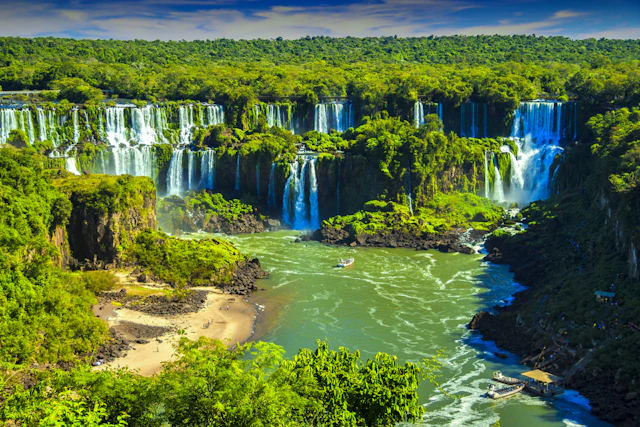
In Southern Brazil, temperatures begin to cool slightly to around 27°C, though summer showers can still occur. This is a good time to visit the Iguaçu Falls, as water levels are high, creating a spectacular display, but be prepared for high humidity.
Brazil Weather in April
Milder, less rain, 27°C Avg
April marks a pleasant transition. Temperatures in Rio de Janeiro cool to a comfortable 27-29°C, and rainfall significantly decreases, making it an excellent time to explore cities and beaches. The Amazon begins its transition to the drier season, with slightly lower humidity. This is a great month for outdoor activities without the peak summer intensity.
The Northeast coast, including Salvador, also sees a reduction in rainfall compared to the summer, with warm temperatures around 28°C. This period offers good conditions for beach activities and exploring historical sites with fewer crowds than peak season.
Brazil Weather in May
Cooler, pleasant, 25°C Avg
May offers some of the most pleasant weather across much of Brazil. Average temperatures in the Southeast (Rio, São Paulo) hover around 25-27°C with significantly less rainfall and lower humidity, making it ideal for sightseeing. The Amazon continues its drying trend, offering good opportunities for jungle treks.
Conversely, the Northeast coast, from Salvador northwards, begins its rainier season in May, with increased showers, though temperatures remain warm at around 27°C. This can mean fewer crowds but also more overcast days for beachgoers in this region.
Brazil Weather in June
Dry, mild, 23°C Avg
June brings cooler, drier weather to the Southeast and South, with Rio's daytime highs a pleasant 25°C or so. This is considered winter, though it's mild and sunny, perfect for exploring. In the Amazon the rains are easing and the rivers are at their highest, when boats can reach deep into the flooded forest.
The Northeast coast, particularly around Salvador and Recife, is in the heart of its rainy season (roughly April to July), with frequent rainfall, although temperatures remain warm at 26-28°C. This time also sees popular Festa Junina celebrations across the country, especially in the Northeast.
Brazil Weather in July
Cooler, dry, 22°C Avg
July is one of the driest and coolest months in the Southeast and South, with Rio's daytime highs around 25°C and plenty of sunshine. It's an excellent time for city exploration and hiking. The Pantanal is in its dry season, ideal for wildlife viewing as animals congregate around shrinking water sources.
The Amazon Basin is into its drier season, with more sunshine for jungle walks as the rivers begin to fall. On the Northeast coast, Salvador is starting to dry out, though Recife is still wet.
Brazil Weather in August
Sunny, crisp, 23°C Avg
August continues the trend of dry, crisp weather in the Southeast and South, with average daytime highs in Rio around 25 to 26°C. It's a fantastic time for outdoor adventures, from trekking in national parks to exploring historical towns. Humidity is low, and skies are generally clear.
While the South enjoys clear skies, the Northeast coast begins to dry out, with rainfall decreasing significantly, though temperatures remain warm at 27-29°C. This period can offer a good balance of pleasant weather and fewer crowds in coastal areas like Bahia.
Brazil Weather in September
Spring warmth, 25°C Avg
September sees temperatures gradually rising across the Southeast and South, averaging 25-27°C in Rio, marking the beginning of spring. Rainfall remains low, and humidity is comfortable. It's a superb month for exploring, with blooming flora and pleasant conditions for hiking and beach visits.
The Amazon Basin is still in its drier season, making it a good time for jungle treks and spotting wildlife, with average temperatures around 30°C. Meanwhile, the Northeast coast experiences increasingly dry and sunny days, perfect for beach holidays in places like Fortaleza or Natal.
Brazil Weather in October
Warm, humid, 27°C Avg
October brings increasing warmth and humidity as Brazil heads towards summer. Average daytime highs in Rio rise to 26 to 27°C, and while rainfall is still moderate, it starts to become more frequent, particularly later in the month. It's a good time for beaches and city exploration before the peak summer heat.
The Pantanal is transitioning from its dry to wet season, with increasing rainfall that can make some areas less accessible but also brings new life to the wetlands. In the Amazon, the 'less wet' season continues, offering comfortable conditions for river tours.
Brazil Weather in November
Hot, building rain, 28°C Avg
November is hot and humid, with average daytime highs in Rio de Janeiro reaching 27 to 28°C. Rainfall becomes more common, especially in the afternoons, signaling the approach of the wet season. Beaches are popular, but be prepared for occasional downpours and increased humidity.
In Southern Brazil, temperatures are warm, around 27-29°C, and rainfall increases as summer approaches. This is a good time to visit the Iguaçu Falls, as water levels are high, creating a powerful spectacle, though humidity will be noticeable.
Brazil Weather in December
Summer heat, 29°C Avg
December kicks off summer, bringing hot and humid conditions across most of Brazil, with Rio's daytime highs averaging 28 to 29°C. Rainfall is frequent and often heavy, especially in the Southeast and Amazon. Despite the rain, it's a popular month for holidays, with Christmas and New Year celebrations. Beaches are crowded and lively.
While the Southeast experiences its wet season, the Northeast coast, from Salvador to Fortaleza, is relatively drier, with warm temperatures around 29-31°C and plenty of sunshine, making it a popular choice for beach holidays. Expect higher prices and crowds due to festive periods.
Regional Weather Differences
Given Brazil's immense geographical spread, the weather can vary significantly from one region to another. Understanding these differences is key to planning your itinerary for the best possible experience.
- Amazon Basin: Best visited during the drier season (June to November) for easier trekking and wildlife spotting, though the wet season offers unique flooded forest experiences.
- Northeast Coast (Bahia, Pernambuco): Generally hot year-round; the driest months (September to March) are ideal for beaches, while April to July see more rain.
- Southeast Coast (Rio, São Paulo): Summers (December to March) are hot and wet; winters (June to August) are mild, dry, and sunny, making them ideal for city exploration.
- Southern Brazil (Iguaçu, Porto Alegre): Experiences more distinct seasons, with hot, humid summers and cooler, drier winters; best visited in spring or autumn for pleasant temperatures.
Best Time to Visit Brazil
For a well-rounded backpacking trip covering diverse regions, the shoulder seasons of April-May or September-October often offer the best balance of pleasant weather across different parts of Brazil. If you're focusing on the Southeast (Rio, São Paulo) and the Pantanal, the dry, mild winter months of June to August are superb. For the Amazon, aim for June to November to avoid the heaviest rains. Ultimately, Brazil is a year-round destination, but knowing your priorities helps tailor the perfect timing.
Which Trip, and When?
Backpacking Brazil (9 days) is Rio de Janeiro, Ilha Grande, Paraty and São Paulo, all on the south-east coast, so the Southeast lines of this guide are the ones to read: June to September is drier and milder, December to March hot, wet and at its liveliest on the beaches.
Backpacking South America (17 days) does the same coast and then carries on to Iguaçu Falls, a ranch in Uruguay and Buenos Aires, and the 9-day Express Adventure starts in São Paulo for the southern half. Iguaçu is at its most thunderous in the wet summer, December to March.
- See all our Brazil trips.
Ready to see Brazil for yourself? Let's go!
We run one trip in Brazil, and 31 more countries besides. Your next adventure is waiting.