

Ecuador's climate is as diverse as its landscapes, offering everything from steamy Amazonian rainforests to cool Andean peaks and unique island ecosystems. Understanding these regional variations is crucial for backpackers, as timing your visit can significantly impact your experience, whether you're trekking volcanoes or snorkelling with sea lions. Let's dive into the best times to explore this incredible country.


Ecuador’s Seasons (Quick Version)
Ecuador's position on the equator means temperatures remain fairly consistent year-round, but rainfall patterns define its distinct seasons. These vary significantly across its diverse regions, so what's 'dry' in one area might be 'wet' in another.
- Warm & Wet Season: This period brings warmer temperatures and higher humidity across much of the mainland, with the Galapagos experiencing its warm, sunny, and wetter season.
- Cool & Dry Season: Generally drier and cooler on the mainland, this is the 'garua' season in the Galapagos, characterised by cooler temperatures, misty conditions, and abundant wildlife.
- Transitional Season: These months act as a bridge between the main seasons, often bringing increasing rainfall to the mainland and a warming trend to the Galapagos.
Galapagos month by month, at a glance
Santa Cruz island, where our trip is based: average daytime high, and each month's rain against the wettest month.

Andes Highlands
Pacific Coast
Amazon Rainforest
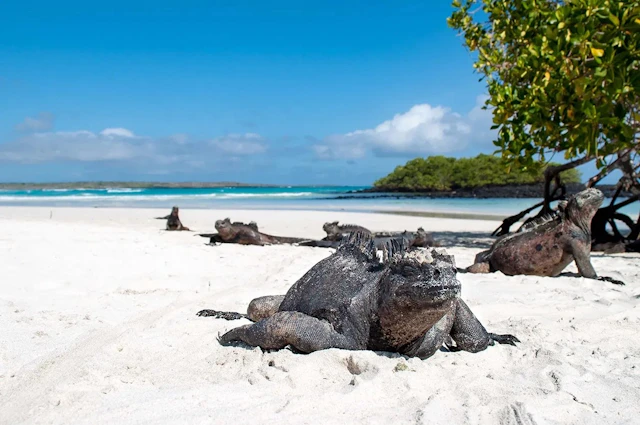
Galapagos Islands
Our Ecuador trips
Here is the 1 trip we run in Ecuador.
Month-By-Month: Ecuador Weather
Ecuador's unique geography means that monthly weather can vary dramatically depending on where you are. Here’s a detailed look at what to expect across the country each month, helping you plan your perfect backpacking adventure.
Ecuador Weather in January
Mixed, warm, wet on coast
January marks the beginning of the warm and wet season for much of mainland Ecuador. The Pacific Coast, around Montañita and Guayaquil, experiences hot, humid weather with frequent heavy showers and temperatures around 30°C. In the Galapagos, it's the start of the warm season, with clear skies, calm seas ideal for snorkelling, and average temperatures of 27°C. Green sea turtles begin nesting, and land iguanas start breeding.
In the Andes highlands, like Quito and Baños, January sees increasing afternoon rainfall, with cooler daytime temperatures averaging 18°C. The Amazon rainforest continues its consistently wet conditions, making river travel a primary mode of transport.
Ecuador Weather in February
Wet, hot, humid
February is typically one of the wettest months on the Pacific Coast, with high humidity and daily downpours, though temperatures remain hot at around 31°C. The Galapagos Islands are in full warm season swing, with bright sunshine, warm waters (25°C), and excellent visibility for diving. Marine iguanas are nesting, and Nazca boobies are breeding. This is a popular time for island visitors.
The Andean region, including Cotopaxi, experiences significant rainfall, particularly in the afternoons, with average temperatures of 17°C. Trails can be muddy. The Amazon basin remains very wet, with lush vegetation and high river levels perfect for exploring by canoe.
Ecuador Weather in March
Very wet, hot, humid
March continues the hot, humid, and very wet trend on the Pacific Coast, with some of the year's heaviest rainfall around Guayaquil, making beach visits challenging. Temperatures hover around 31°C. In the Galapagos, it's still warm and sunny, with water temperatures peaking at 26°C. Waved albatrosses begin their courtship rituals on Española, and marine life is abundant. It's a great time for underwater photography.
The Andean highlands are at their wettest, with frequent and heavy afternoon showers. Daytime highs in Quito sit around 19°C. Trekking can be difficult due to slippery conditions. The Amazon rainforest is consistently wet, creating stunning waterfalls and vibrant ecosystems, with temperatures around 28°C.
Ecuador Weather in April
Wet, warm, transitional
April sees a slight decrease in rainfall on the Pacific Coast, though it remains warm and humid at 30°C, with intermittent showers. The Galapagos Islands are still in their warm season, offering clear skies, calm seas, and excellent snorkelling conditions, with temperatures around 26°C. Green sea turtle hatchlings emerge, and land birds are active. It's a sweet spot before the garua season begins.
The Andes still experience substantial rainfall, especially in the early part of the month, with average temperatures around 17°C. However, towards the end of April, the rains may start to lessen. The Amazon rainforest continues its very wet pattern, ideal for wildlife spotting around flooded areas.
Ecuador Weather in May
Drying, pleasant, warm
May marks a significant transition, with rainfall decreasing across much of the mainland. The Pacific Coast becomes much drier and more pleasant, with warm temperatures around 29°C and less humidity. In the Galapagos, the warm season begins to transition to the cooler garua season, with temperatures around 25°C. Blue-footed boobies begin courtship dances, and marine conditions remain excellent.
The Andean highlands, including Baños, see a noticeable reduction in rainfall, making it a good month for trekking and outdoor activities, with pleasant daytime temperatures of 18°C. The Amazon remains relatively wet, but with slightly fewer intense downpours compared to the peak rainy months.
Ecuador Weather in June
Dry, cool, clear
June is the beginning of the dry season for the Andes and Pacific Coast. The Pacific Coast is now dry but often overcast, as the cool Humboldt Current brings grey skies, with temperatures around 28°C and lower humidity. In the Galapagos, the cool 'garua' season starts, bringing cooler temperatures (23°C), misty mornings, and nutrient-rich waters attracting abundant marine life (whale sharks gather around the far northern islands of Darwin and Wolf, reached only by liveaboard dive boats). Sea lion pups are born.
The Andean highlands, such as Quito and Cotopaxi, enjoy their driest and clearest weather, with crisp mornings and sunny afternoons averaging 17°C. This is prime time for hiking and volcano climbing. The Amazon still sees regular rainfall, but it's generally less intense than the earlier months.
Ecuador Weather in July
Excellent, dry, cool
July is one of the best months for visiting the Andean highlands, offering some of the driest and clearest weather, perfect for exploring Quito or trekking near Baños, with daytime highs around 19 to 20°C in Quito. The Pacific Coast remains dry, with temperatures of 27°C, though skies are often grey. The Galapagos is in full garua, with abundant wildlife like flightless cormorants nesting and waved albatross chicks hatching. Whale sharks are frequently seen.
The Amazon rainforest experiences its 'least wet' period, though still receiving significant rainfall, making it manageable for jungle excursions. Water levels are moderate, allowing for good canoe access. Sea conditions in the Galapagos can be choppier due to cooler currents.
Ecuador Weather in August
Excellent, dry, cool
August mirrors July's excellent conditions for the Andes, with continued dry and clear weather, making it ideal for outdoor adventures and enjoying spectacular mountain views around 17°C. The Pacific Coast remains dry and often cloudy, with temperatures around 27°C. In the Galapagos, the garua season continues, with cooler temperatures (22°C), misty conditions, and peak whale shark sightings. This is a fantastic time for marine wildlife.
The Amazon basin continues its 'least wet' trend, offering slightly fewer heavy downpours than other times of the year, with temperatures around 27°C. This can be a good compromise for those wanting to experience the rainforest with a bit less intensity. Crowds can be higher due to school holidays.
Ecuador Weather in September
Good, cool, dry
September is still a good month for the Andean highlands, with predominantly dry and clear weather, though occasional afternoon showers may begin to return towards the end of the month, with temperatures around 17°C. The Pacific Coast stays dry and mostly overcast, with comfortable temperatures of 27°C. The Galapagos remains in its cool garua season, with temperatures around 22°C. Sea lions are active, and penguins are very visible in the cooler waters.
The Amazon rainforest begins to see a slight increase in rainfall compared to the previous two months, though still manageable for exploration. This is a shoulder month, offering a balance of conditions across regions. Sea conditions in the Galapagos are still cool and can be choppy.
Ecuador Weather in October
Transitional, warming, wetter
October marks a transition. The Andean highlands see increasing rainfall, especially in the afternoons, making some treks more challenging, with temperatures around 17°C. The Pacific Coast remains relatively dry and pleasant, with temperatures around 28°C. In the Galapagos, the garua season begins to wane, with temperatures starting to warm up (23°C) and skies becoming clearer. Blue-footed booby chicks are fledging, and fur seals are breeding.
The Amazon rainforest experiences a noticeable increase in rainfall, signalling a return to its consistently wet pattern. This is a month where regional planning is key, as conditions can vary significantly from coast to mountains. The warming waters in the Galapagos can improve snorkelling comfort.
Ecuador Weather in November
Warming, mixed conditions
November is a shoulder month with mixed conditions. The Andean highlands experience increasing rainfall, particularly in the latter half of the month, with temperatures around 18°C. The Pacific Coast generally remains warm and relatively dry, though showers become more frequent towards the end of the month, with temperatures around 29°C. The Galapagos Islands are fully transitioning to the warm season, with rising temperatures (24°C) and clearer, calmer waters, excellent for diving and snorkelling.
The Amazon rainforest is firmly back into its wet season, with regular heavy downpours. This month can offer fewer crowds on the mainland before the peak holiday season. Sea conditions in the Galapagos are becoming increasingly calm and warm, attracting a different array of marine life.
Ecuador Weather in December
Wet season starts, warm
December ushers in the wet season for much of mainland Ecuador. The Pacific Coast becomes hot and humid with increasing rainfall, particularly towards the end of the month, with temperatures around 30°C. In the Galapagos, it's the official start of the warm and wet season, bringing sunny days, occasional heavy showers, and warm, clear waters (25°C). Giant tortoises are nesting, and green sea turtles begin their breeding season.
The Andean highlands experience frequent afternoon showers, making some outdoor activities challenging, with temperatures around 18°C. The Amazon rainforest is very wet, with high river levels. Despite the rain, the festive season can bring higher visitor numbers to popular mainland spots.
Regional Weather Differences
Ecuador's incredible biodiversity is matched by its diverse climates. To truly understand the weather, you need to look at it region by region. Each area offers a distinct experience, influenced by altitude, ocean currents, and rainforest dynamics.
- Andes Highlands: Expect cool, spring-like weather year-round, with a distinct dry season from June to September perfect for trekking, and a wet season from October to May with afternoon showers.
- Pacific Coast: Experience hot and humid conditions with heavy rainfall from December to May, transitioning to a dry, cooler and often overcast season from June to November.
- Amazon Rainforest (Oriente): Prepare for hot, humid, and wet conditions year-round, with slightly 'less wet' periods in July and August, but always expect rain and lush greenery.
- Galapagos Islands: Enjoy a warm and wet season from December to May with sunny skies and calm seas, followed by a cooler, drier 'garua' season from June to November with misty conditions and abundant marine life.
Best Time to Visit Ecuador
For mainland backpacking, the dry season from June to September is generally considered the best time to visit Ecuador. During these months, the Andean highlands offer clear skies and ideal trekking conditions, and the Pacific Coast is dry, if often grey. However, if your focus is the Galapagos Islands, the warm and wet season (December to May) provides calmer, clearer waters perfect for snorkelling and diving, while the cooler garua season (June to November) brings incredible marine wildlife sightings, including whale sharks and penguins, despite mistier skies and choppier seas. Ultimately, Ecuador is a year-round destination; your 'best time' depends on your priorities!
Which Trip, and When?
Our Ecuador trip is Backpacking Galapagos (7 days), which island-hops San Cristóbal, Santa Cruz and Isabela by boat: snorkelling at Tijeretas and Concha Perla, the Charles Darwin Research Station, the Sierra Negra volcano viewpoint, and giant tortoises and lava tunnels in the Santa Cruz highlands.
It is a trip that works in any season, with a trade-off. December to May is the warm season: water around 25 to 26°C, calmer seas for the boat crossings, sunshine and the odd heavy shower. June to November brings the cooler garúa: grey skies, water down to 21 to 22°C (a wetsuit helps), choppier crossings, and the richest sea life. Our guide to Galapagos flights and when to go covers getting there.
- See all our Ecuador trips.
Ready to see Ecuador for yourself? Let's go!
We run one trip in Ecuador, and 30 more countries besides. Your next adventure is waiting.